
Executive Director
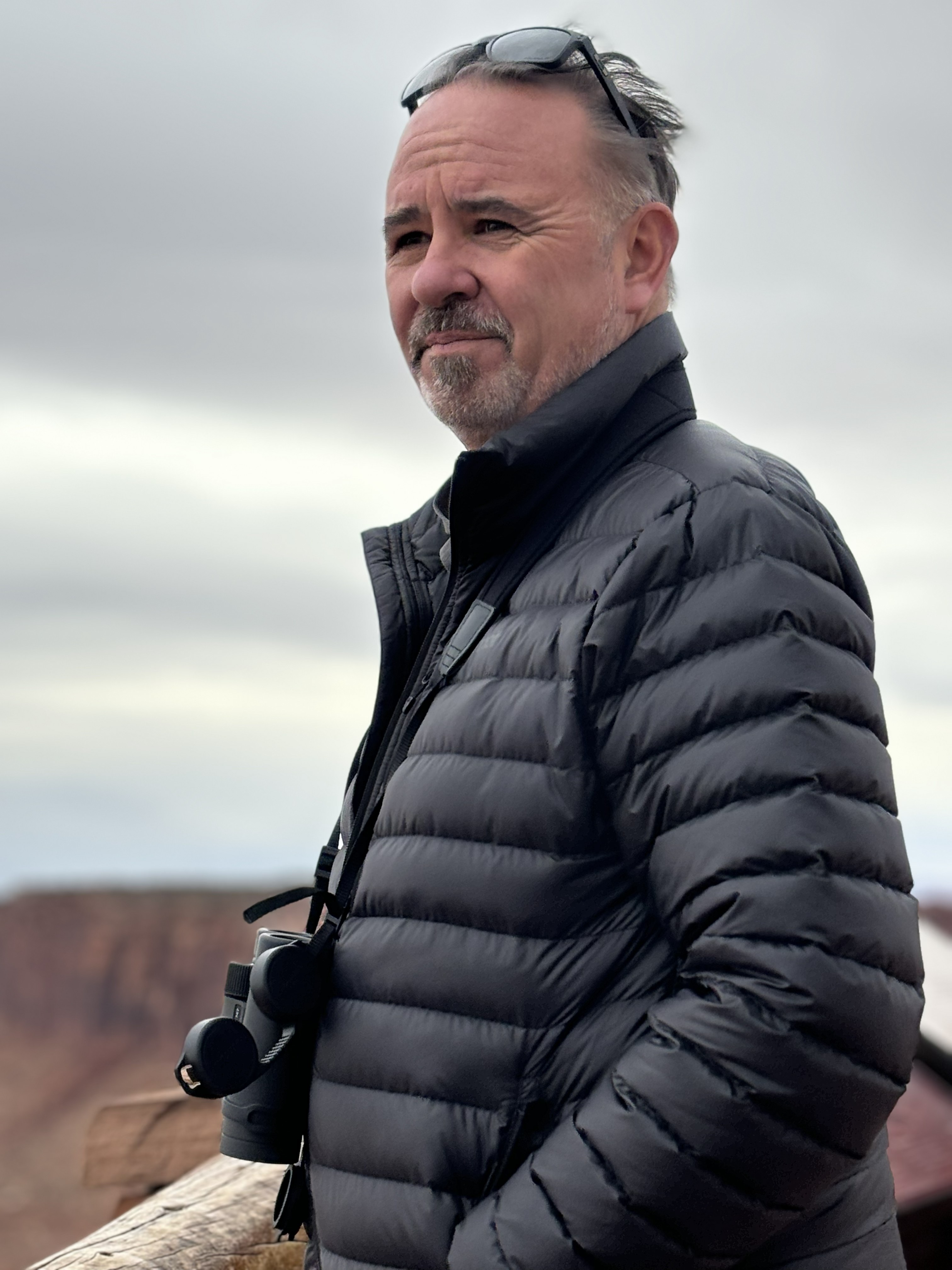
BRI’s Executive Director and Chief Scientist, David Evers.
David C. Evers, M.S., Ph.D
Executive Director, Chief Scientist, and Founder
david.evers@briwildlife.org
207-839-7600 x221
Dr. David C. Evers is an internationally recognized wildlife ecologist and conservation scientist whose career has been defined by long-term research on the effects of mercury and other contaminants on ecosystems and human health. Dr. Evers is the Founder, Executive Director, and Chief Scientist of Biodiversity Research Institute (BRI), an independent research organization dedicated to assessing emerging threats to wildlife and ecosystems. BRI is comprised of four Centers of Excellence, 17 Research Programs and five Research Labs.
Research and Scientific Contributions
Dr. Evers is widely known as the leading authority on loons, pioneering research on their ecology and sensitivity to mercury contamination. His early studies were among the first to safely capture, mark and take tissue samples to establish loons as flagship indicators for understanding the exposure and effects of mercury – setting the stage for decades of research and conservation action.
Over the course of his career, Dr. Evers has published more than 165 peer-reviewed papers and seven books, contributing to the fields of avian ecology, ecotoxicology, and conservation biology. His publications have advanced understanding not only of loons and mercury, but also other topics about wildlife conservation worldwide. He more than 250 presentations at scientific and policy-oriented professional venues and has convened over 30 scientific working groups with the goal of generating peer-reviewed publications and synthesis papers. His research rankings are in the top 5% of his colleagues with a h-index of 61 and an i10-index of 151. The number of publications citing his work is currently at 11,525.
Global Leadership and Policy Impact
Dr. Evers’ expertise has positioned him at the forefront of science–policy engagement. His contributions have played a critical role in the development and implementation of the Minamata Convention on Mercury, the landmark United Nations treaty addressing global mercury pollution. He works closely with the United Nations Environment Programme (UNEP) and other international organizations to bring scientific evidence into the decision-making process, ensuring that global policy is grounded in sound ecological data.
In addition, Dr. Evers spent many years on Capitol Hill in Washington, D.C., working closely with the U.S. Environmental Protection Agency to help foster the formation and eventual passing of the Mercury and Air Toxics Standards Rule. This further demonstrates his commitment to integrating science with policy to address environmental health challenges.
Institutional Growth and Fundraising
Since founding BRI in 1998, Dr. Evers has led BRI’s growth from a small regional nonprofit into a globally recognized scientific organization. Under his direction, BRI has secured more than $150 million in research funding from government agencies, foundations, and private industry. BRI has now expanded its scope to include research and conservation topics on contaminants in addition to mercury (e.g., oil spills and PFAS), renewable energy, climate change, and biodiversity conservation across terrestrial, freshwater, and marine ecosystems.
International Projects and Reach
Dr. Evers has directed conservation science projects in more than 50 countries, building strong collaborations with scientists, governments, and conservation groups across North America, Europe, Africa, Asia, and South America. A global perspective ensures that local and regional research findings inform international conservation priorities, from mercury monitoring in Arctic ecosystems to biodiversity protection in tropical landscapes.
In addition to his roles at BRI, Dr. Evers is also the co-owner of CarbonSolve, a leading carbon credit developer. In this capacity, he has served as the lead in conducting biodiversity surveys that have contributed to Climate, Community & Biodiversity Certification. His efforts are helping establish a platform for developing biodiversity credits for projects across Africa, with particular emphasis on Kenya, Tanzania, and Zambia. This work not only supports climate mitigation but also enhances conservation outcomes by integrating rigorous ecological assessments into carbon market initiatives.
Education & Certifications
Education
- Ph.D., Conservation Biology, University of Minnesota, 2001
- M.S., Ecology, Western Michigan University, 1992
- B.S., Wildlife Management, Michigan State University, 1984
Certifications & Nominated Member
- Elected National Fellow of the Explorers Club in 2012.
- Editorial Board Member for peer-reviewed journal, Diversity
- Elective Member of the American Ornithologists' Society
- United Nations Environment Programme's Minamata Convention Toolkit Trainer. 2015.
- United States Geological Survey Master permit holder for banding birds. Banded more than 50,000 individual birds representing over 250 species. Current federal permit covers 42 states. 1993-present.
Published Papers
Research Interests
- Conservation of endangered species
- Exposure and effects of methylmercury on wildlife in temperate, tropical, arctic, and marine environs
- Ecology, natural history, and conservation of the Common Loon and other loon species
Books and Field Guides
- Evers, D.C., E. Jenkins, T. Tear, and W. Kasaine. 2026. Birds of Amboseli. Big Dipper Books, Portland, Maine. 160pp.
- Evers, D.C. and K.M. Taylor. 2020. Loon Landscapes. Willow Creek Press, Minocqua, Wisconsin. 152pp
- Evers, D.C. and K.M. Taylor. 2015. Journey with the Owls. Willow Creek Press, Minocqua, WI. 160 pp.
- Evers, D.C. and K. M. Taylor. 2014. Journey with the Loon. Willow Creek Press, Minocqua, WI. 144 pp.
- Evers, D.C. and K. M. Taylor. 2008. Call of the Northwoods. Willow Creek Press, Minocqua, WI. 96 pp.
- Evers, D. C. and K. M. Taylor. 2006. Call of the Loon. Willow Creek Press, Minocqua, WI. 112 pp.
- Evers, D. C. 1998. A guide to the birds of the Hiawatha National Forest. Wildl. Unl., Escanaba, MI. 36pp.
- Evers, D. C. (editor). 1994. Endangered and Threatened Wildlife of Michigan. Univ. Mich. Press, Ann Arbor, MI. 412pp.
- Evers, D. C. 1992. A Guide to Michigan’s Endangered Wildlife. Univ. of Mich. Press, Ann Arbor, MI. 103pp.
- Evers, D. C. 1991. Species accounts for 16 species in Brewer, R., G. McPeek, and R. Adams, Jr. The Atlas of Breeding Birds of Michigan. Mich. State Univ. Press, E. Lansing, MI. 594pp.
- Evers, D. C., G. A. McPeek, and R. J. Adams. 1989. Michigan’s changing bird populations in J. Eastman (ed.). Enjoying Birds of Michigan. Center for Environmental Studies Publications, Grand Rapids, MI. 148pp.
International Projects
- Burkina Faso, Comoros, Côte d'Ivoire, Ethiopia, Guinea, Madagascar, Mauritania, Niger, Nigeria, Sierra Leone, South Africa, Togo, and Uganda. Eliminating Mercury in Skin-lightening Cosmetics on a Global Scale through Regulation, Training and Outreach Activities. 2026-2031.
- Mexico, Antigua and Barbuda, Cambodia, Pakistan, and Philippines. Eliminating Mercury in Skin-lightening Cosmetics on a Global Scale through Regulation, Training and Outreach Activities. 2026-2031.
- Gabon, Jamaica, Sri Lanka: Eliminating Mercury in Skin-lightening Cosmetics on a Global Scale through Regulation, Training and Outreach Activities, 2020-2026
- Antigua and Barbuda: Developing a Caribbean Region Mercury Monitoring Network, 2020-2021
- Geneva, Switzerland: Reviewing Minamata Initial Assessment Reports, 2020-2021
- South Pacific Islands (Cook Islands, Kiribati, Palau, Tonga, Tuvalu, Vanuatu): Enabling Activities to Conduct Minamata Initial Assessments (MIA) in South Pacific, 2019-2021
- Geneva, Switzerland: Activities related to needs by the Minamata Convention, 2019
- Indonesia: Activities related to ASGM needs in Indonesia, 2018-2021
- Belize: Enabling Activities to Conduct Minamata Initial Assessment (MIA) in Belize, 2018-2020
- Maldives: Enabling Activities to Conduct Minamata Initial Assessment (MIA) in Maldives, 2018-2019
- Antigua and Barbuda, Dominica, Grenada, Jamaica, St. Kitts and Nevis, St. Lucia, St. Vincent and the Grenadines, Trinidad and Tobago: Enabling Activities to Conduct Minamata Initial Assessment (MIA) in the Caribbean Islands, 2017-2019
- Montenegro: Enabling Activities to Conduct Minamata Initial Assessment (MIA) in Montenegro, 2016-2017
- Georgia: Enabling Activities to Conduct Minamata Initial Assessment (MIA) in Georgia, 2016-2017
- Azerbaijan: Enabling Activities to Conduct Minamata Initial Assessment (MIA) in Azerbaijan, 2016-2017
- Albania: Enabling Activities to Conduct Minamata Initial Assessment (MIA) in Albania, 2016-2018
- Jordan: Enabling Activities to Conduct Minamata Initial Assessment (MIA) in Jordan, 20176-2018
- Mauritius: Enabling Activities to Conduct Minamata Initial Assessment (MIA) in Mauritius, 2015-2018
- Seychelles: Enabling Activities to Conduct Minamata Initial Assessment (MIA) in Seychelles, 2015-2016
- Nepal, Sao Tome, Cabo Verde, Guatemala, and Sri Lanka: Enabling Activities to Conduct Minamata Initial Assessment (MIA) in Nepal, Sao Tome, Cabo Verde, Guatemala, and Sri Lanka, 2015-2018
- Chad: Enabling Activities to Conduct Minamata Initial Assessment (MIA) in Chad, 2015-2018
- Peru: Development and implementation of artisanal and small-scale miner training resources for reducing mercury use and release in South America and generation of biomonitoring program design, 2013-2016
Grants, Awards & Fellowships
- Over 740 separate grants, from >220 different agencies or organizations or companies, totaling >$165 million have been awarded for >430 different projects. Most of these grants are related to research with birds (especially loons) and environmental stressors (e.g., mercury and oil pollution impacts to wildlife), renewable energy (e.g., hydro, solar, and wind), biodiversity surveys, and development of carbon credits. Some funding was directed toward research with neotropical migrants, growth of a non-profit organization, and publications/research with endangered and threatened species.
- Over $21 million granted to assist the United Nations Environment Programme, United Nations Industrial Development Organization and the United Nations Development Program with the Minamata Initial Assessment process for 36 countries in Africa, eastern Europe, Latin America and the Caribbean, the Mid-East, Asia and the South Pacific; as well as for mercury database development and skin-lightening products.
