Science Communication Library
At Biodiversity Research Institute, we believe that science must inspire action, foster understanding, and spark conversation. With science communication, we highlight our work and bridge the gap between complex research and real-world conservation action. BRI staff also develop sampling protocols for standardized data collection and analysis.
Explore all of our communications pieces below! Use the top row to select topics of interest or use the search bar. If you have questions or further inquiries, please reach out to Allie Foster.

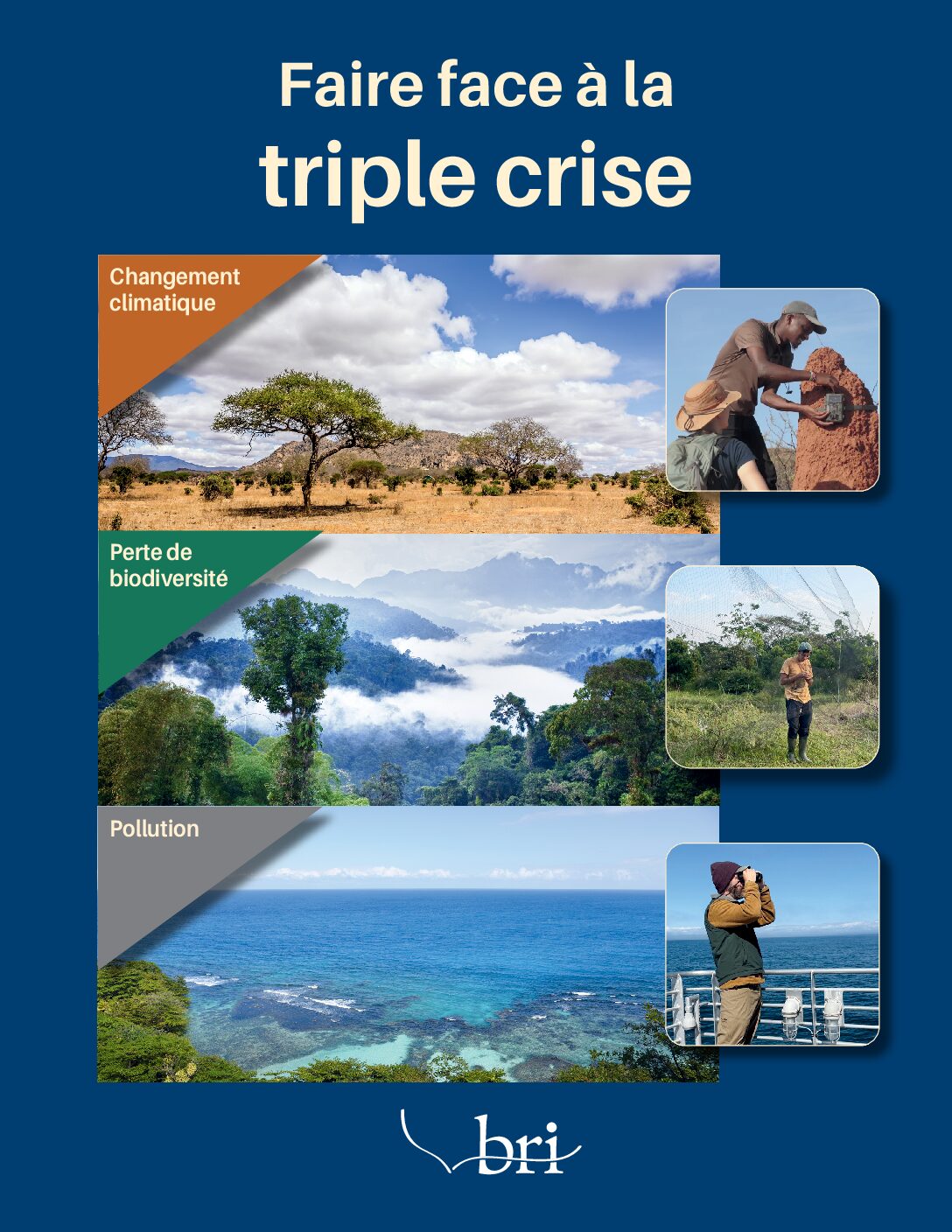
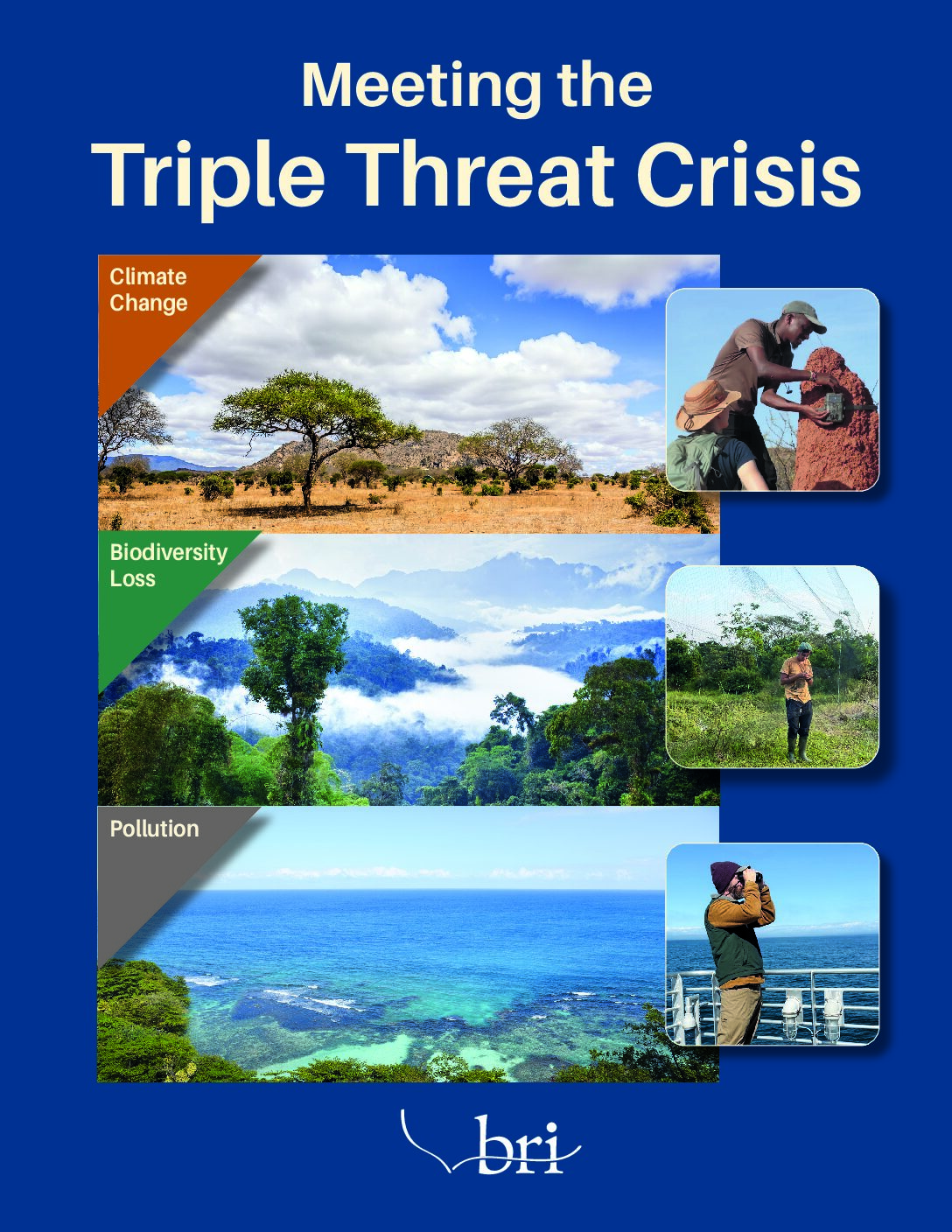
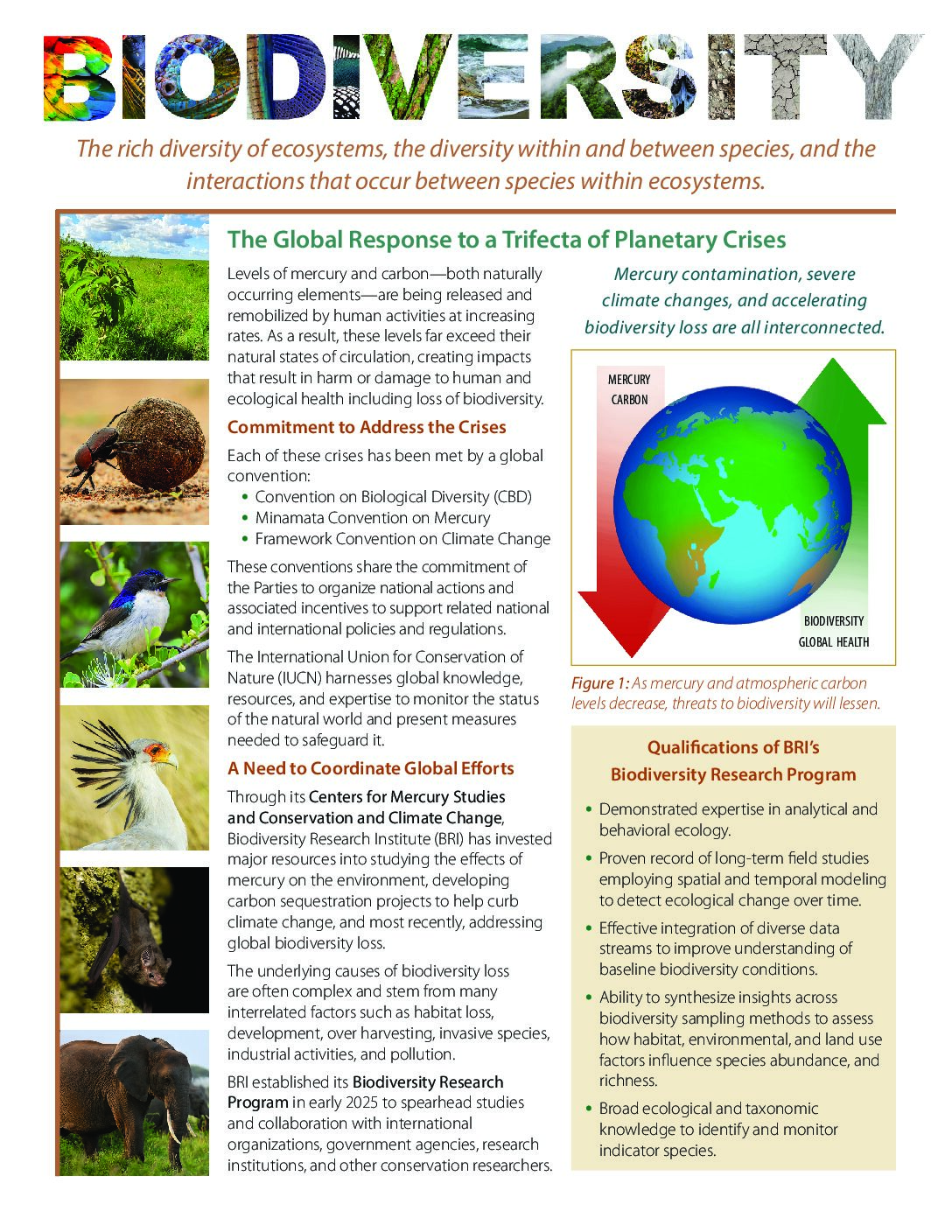
Faire face à la triple crise
Published: October 2026
Cette brochure met en avant les capacités de recherche du BRI en matière de biodiversité, ainsi que nos projets et notre expertise de premier plan à l'échelle mondiale concernant le mercure (exploitation aurifère artisanale et à petite échelle, biosurveillance, etc.).
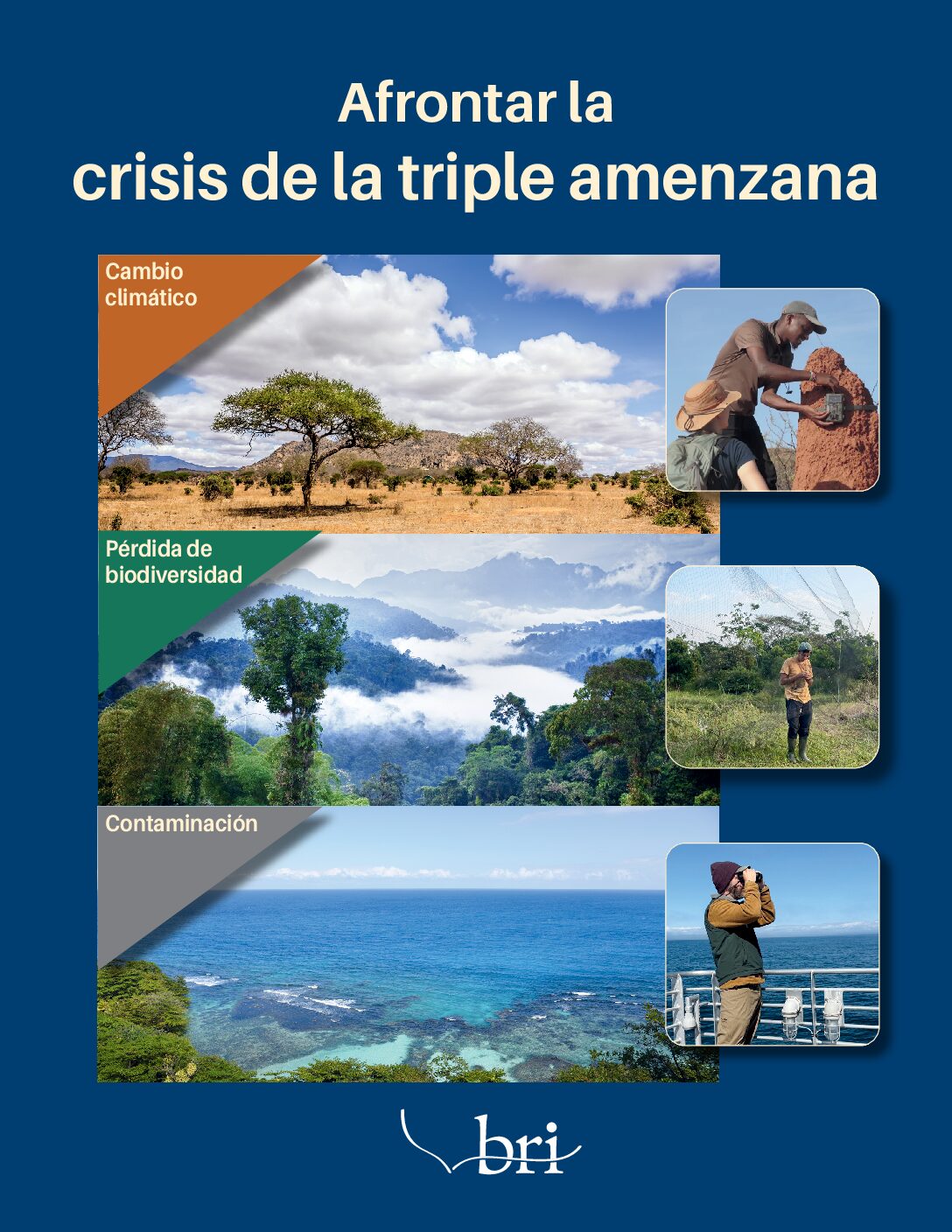
Afrontar la crisis de la triple amenaza
Published: October 2026
Este folleto destaca las capacidades de BRI en materia de investigación sobre biodiversidad, así como nuestros proyectos y experiencia de liderazgo mundial en el ámbito del mercurio (minería de oro artesanal y de pequeña escala, biomonitoreo, etc.).
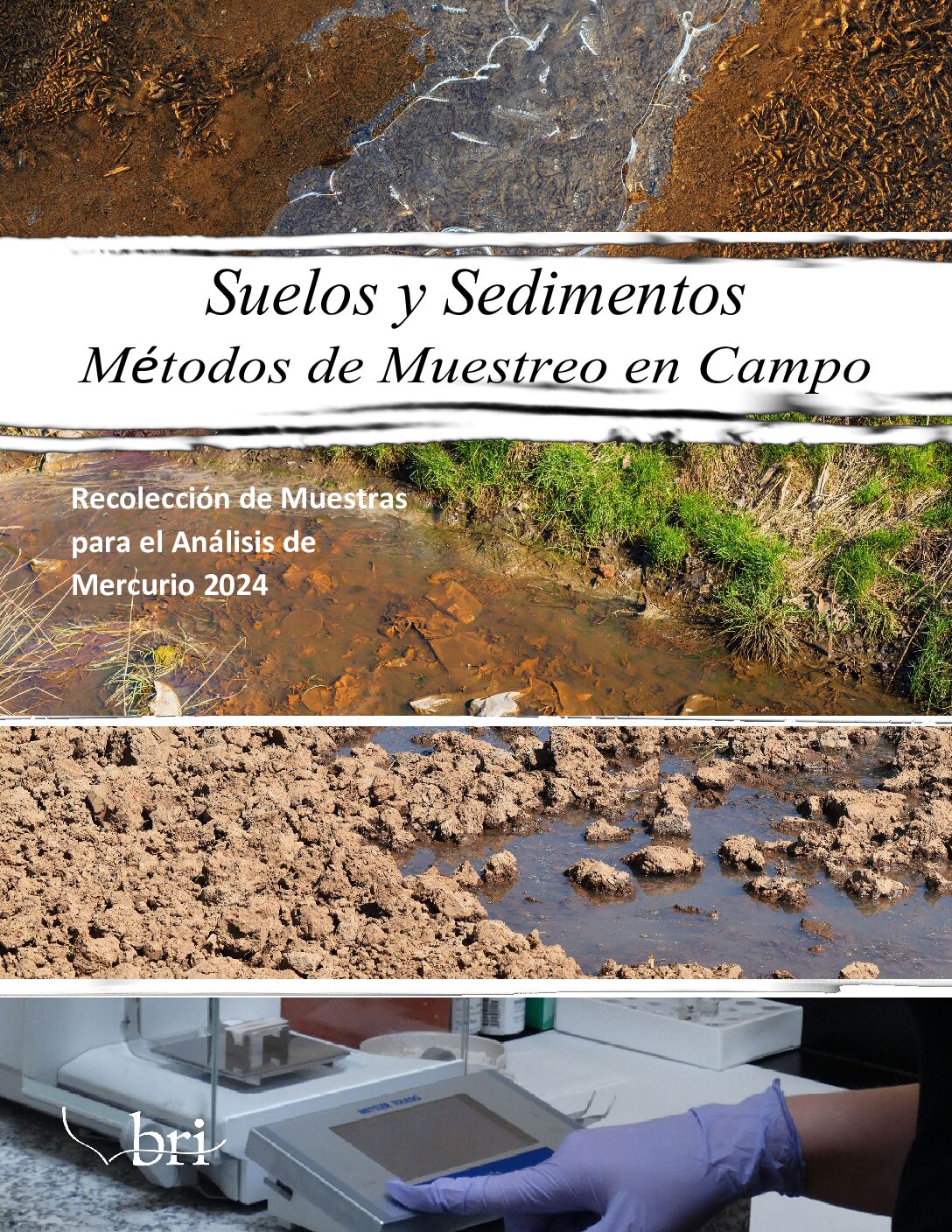
Metodos de Muestro de Suelos y Sedimoentos en el Campo: Recolección de suelos y sedimentos para análisis de mercurio
Published: September 2026
El mercurio es un contaminante ampliamente distriubuido y persistente que se emite y libera al medio ambiente a través de procesos geogénicos y antropogénicos, tanto directos como indirectos. Una vez emitido, puede viajar lejos de su fuente y transformarse en metilmercurio, una forma neurotóxica y asequible naturalmente. A través de los procesos de bioacumulación y biomagnificación, el mercurio puede aumentar el riesgo de reducción del éxito reproductivo, provocar cambios en el comportamiento y generar otros impactos adversos con implicaciones para la salud humana y el medio ambiente.
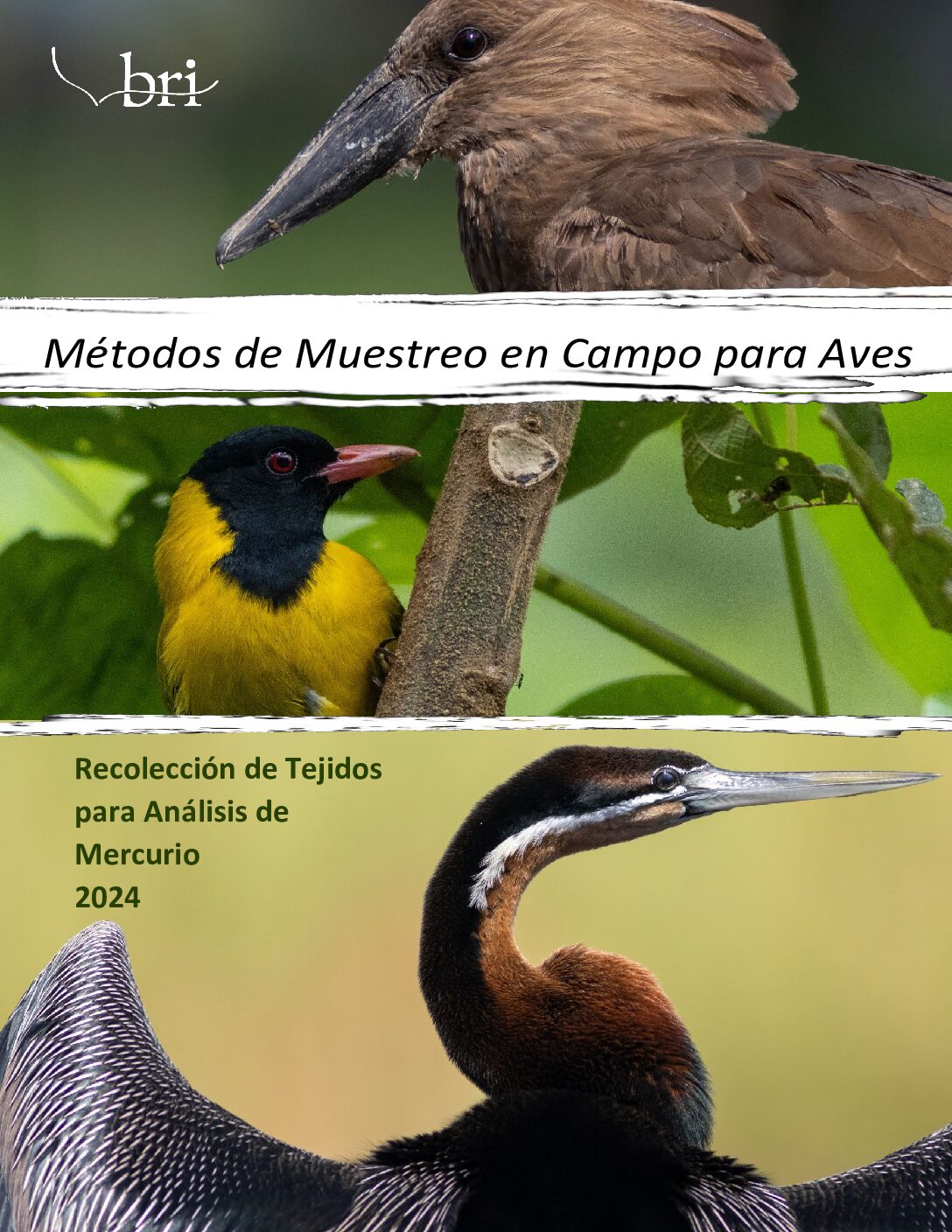
Métodos de Muestreo en Campo para Aves: Recolección de Sangre y Plumas para Análisis de Contaminantes, Isótopos Estables y Genéticos
Published: September 2026
La recolección y análisis no letales de muestras de sangre completa en aves se utiliza para identificar la ingesta dietética reciente de contaminantes, como el mercurio (Evers 2018), y varios isótopos estables (como, δ13C, δ15N, δ34S) que permiten la reconstrucción de la dieta y la identificación de los orígenes migratorios. Las muestras de sangre se pueden obtener mediante dos técnicas de venopunción: extracción directa y punción.
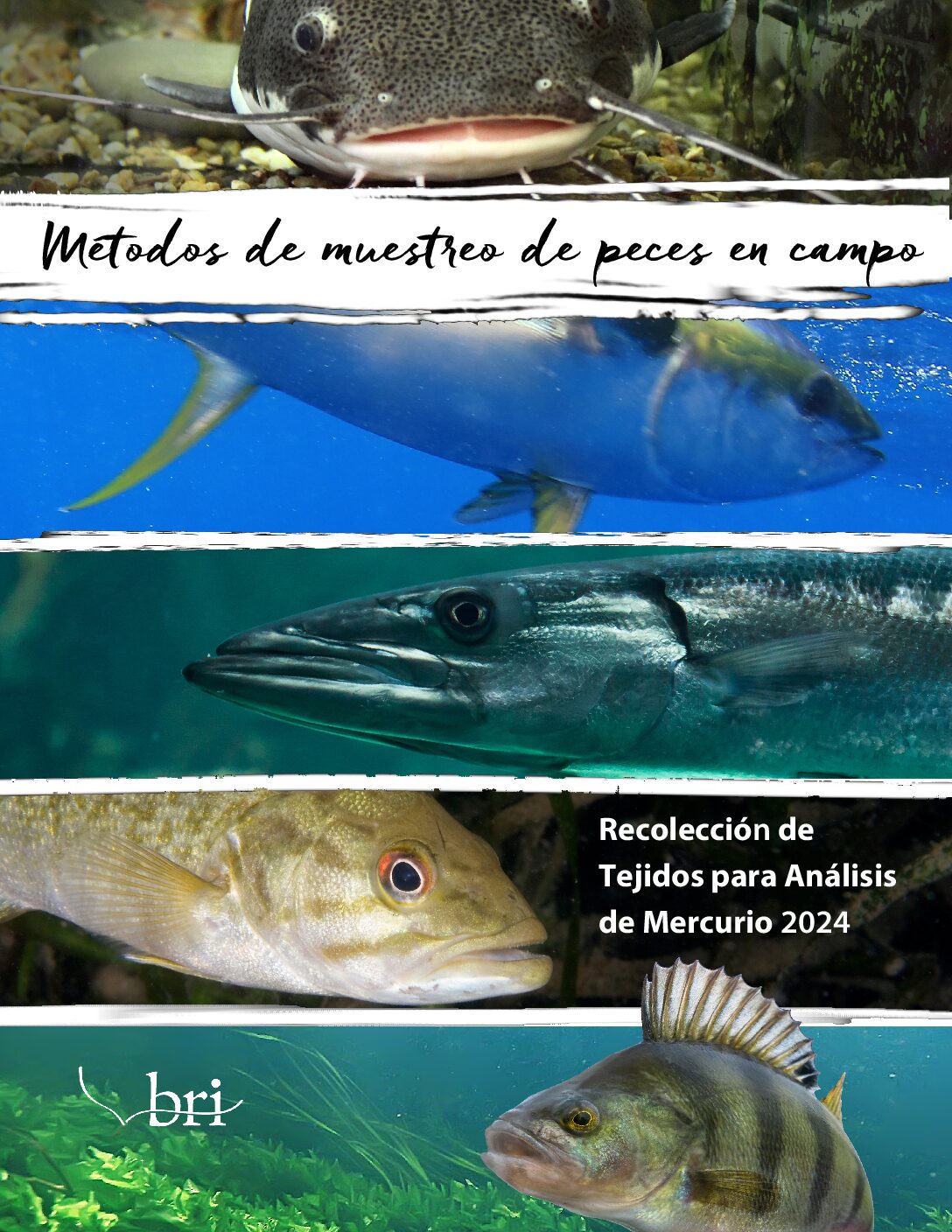
Métodos de Muestreo de Peces en el Campo: Recolección de Tejidos para Análisis de Mercurio
Published: September 2026
Este protocolo de muestreo está diseñado como una guía para la recolección, procesamiento y envío de muestras de tejido de pescado para la medición de mercurio total. La recolección de muestras siguiendo estos protocolos generales permitirá realizar comparaciones entre los sitios de muestreo y ayudará a identificar posibles puntos críticos de contaminación por mercurio que representen un riesgo para la salud humana y los ecosistemas.
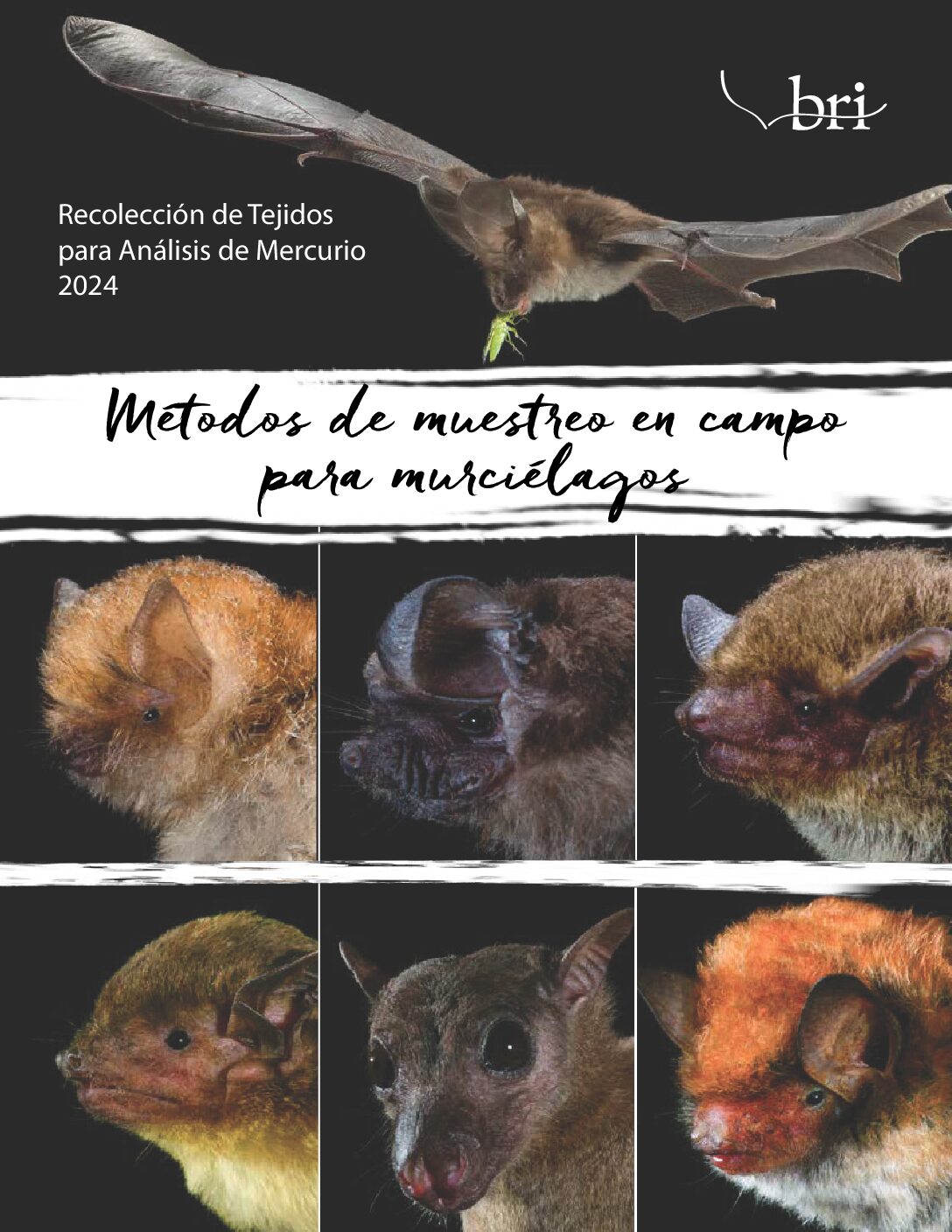
Metodos de muestro en campo para murciélagos
Published: September 2026
La recolección no letal y el análisis de muestras de sangre total en murciélagos se utilizan para identificar el consumo reciente de contaminantes en la dieta, como el mercurio (Evers 2018), y varios isótopos estables (δ13C, δ15N, δ34S) que permiten la reconstrucción de la dieta y la identificación de los orígenes migratorios. Las muestras de sangre se pueden obtener mediante punción venosa en las venas del ala o la cola.
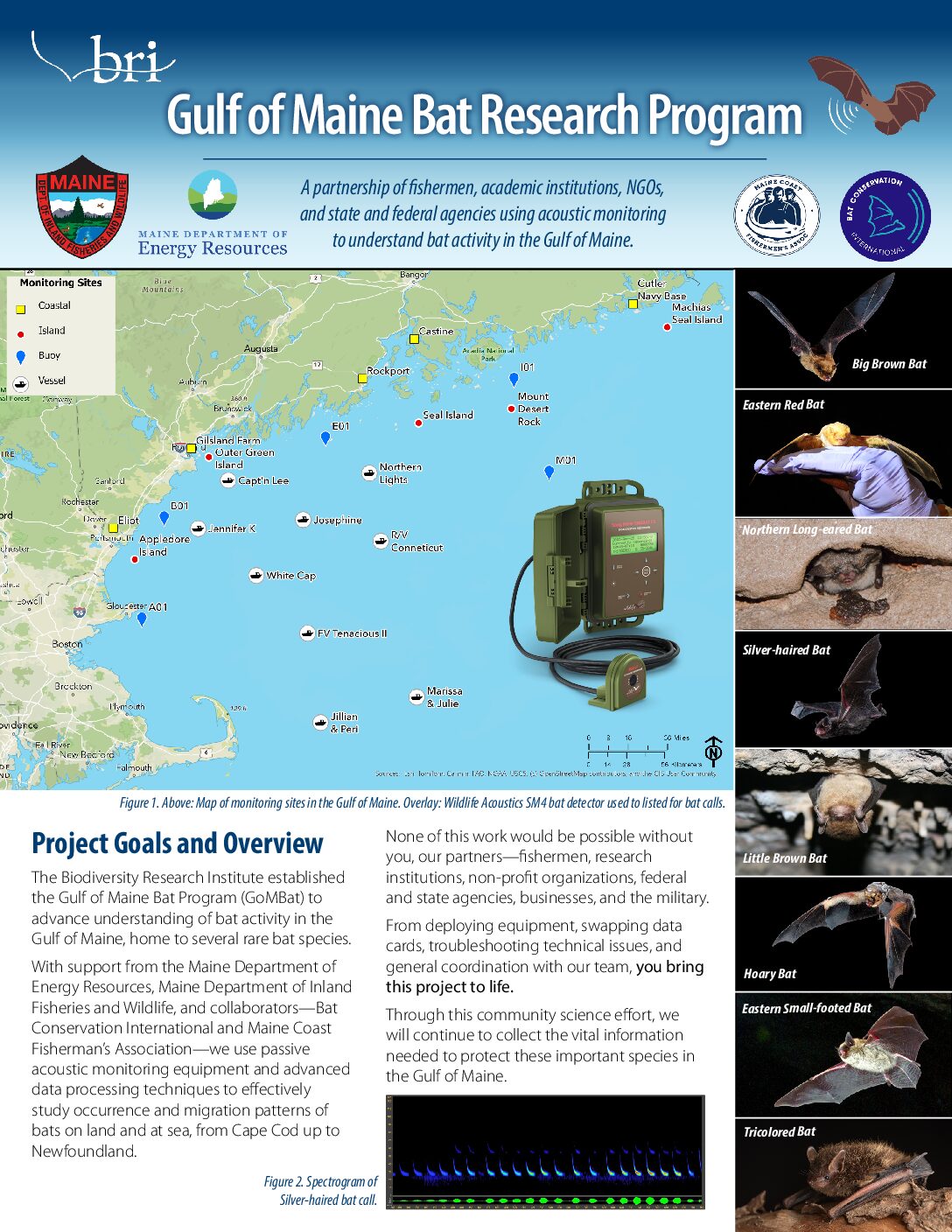
Gulf of Maine Bat Research Program: F/V Tenacious II
Published: September 2026
The Biodiversity Research Institute established the Gulf of Maine Bat Program (GoMBat) to advance understanding of bat activity in the Gulf of Maine, home to several rare bat species. This flier presents results from bat monitoring activities during spring 2026.
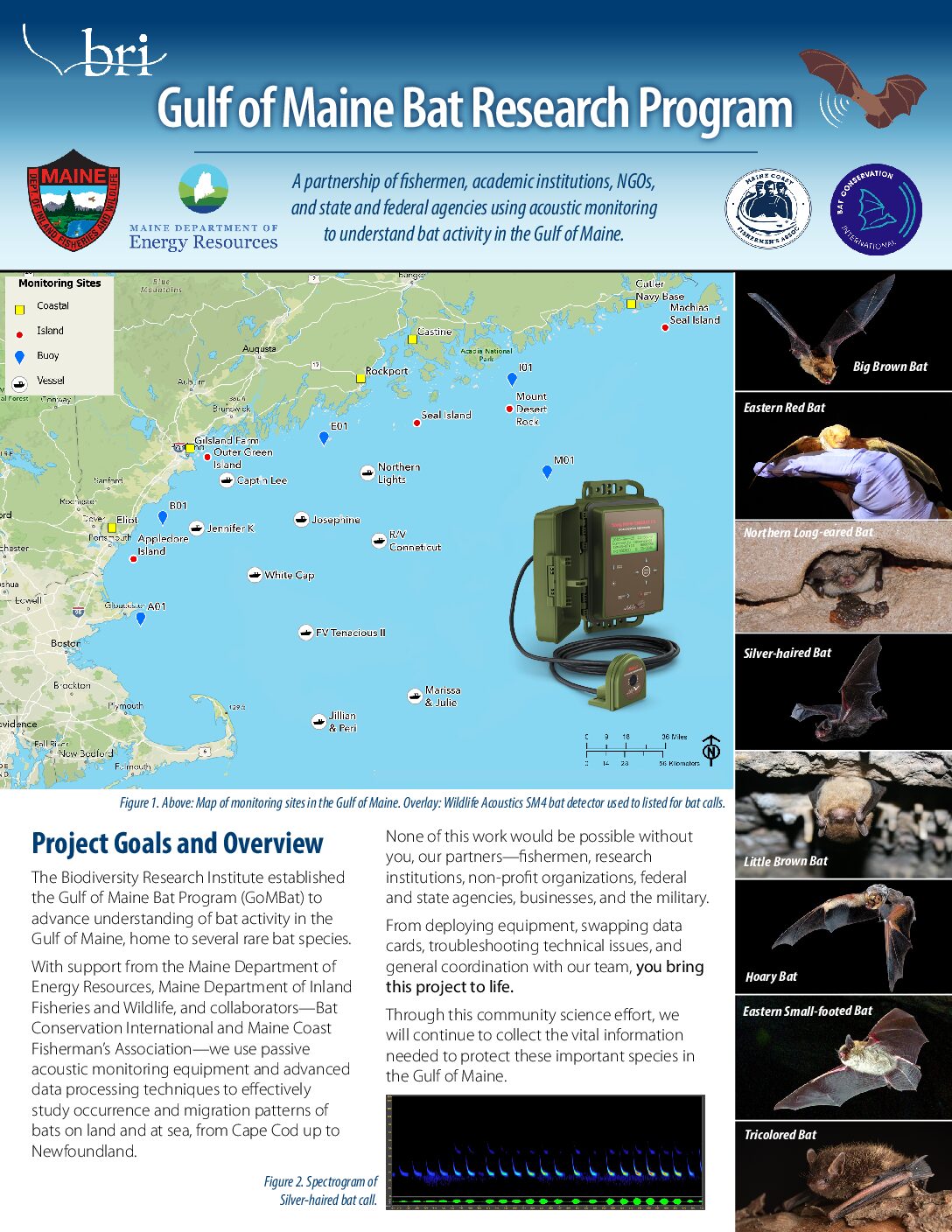
Gulf of Maine Bat Research Program: R/V Connecticut
Published: September 2026
The Biodiversity Research Institute established the Gulf of Maine Bat Program (GoMBat) to advance understanding of bat activity in the Gulf of Maine, home to several rare bat species. This flier presents results from bat monitoring activities during spring 2026.
Guide de suivi pour l’élimination des SLPs contenant du mercure
Published: September 2026
Le présent document d’orientation a été élaboré dans le cadre du projet n° 10810 du Fonds pour l’environnement mondial (FEM), intitulé « Élimination des produits éclaircissants pour la peau contenant du mercure (Jamaïque, Gabon et Sri Lanka) ». Il résume les conclusions et les enseignements tirés des recherches préliminaires, des consultations avec les parties prenantes et d’une série d’ateliers de formation organisés dans le cadre du projet, en s’appuyant notamment sur l’atelier national du Sri Lanka qui s’est tenu à Colombo, au Sri Lanka, le 2 juin 2025. Les documents et rapports pertinents issus de cet atelier ont servi de base à l’élaboration du présent document et sont également disponibles.
Monitoring and Enforcement Measures to Eliminate Mercury-added SLPs
Published: September 2026
This guidance document has been developed under the Global Environment Facility (GEF) Project 10810 Eliminating Mercury Skin Lightening Products (Jamaica, Gabon and Sri Lanka). It summarizes findings and insights generated through background research, stakeholder consultations, and a series of training workshops conducted as part of the project, with particular reference to the Sri Lanka National Workshop held in Colombo, Sri Lanka on 2 June 2025. Relevant workshop materials and reports have informed the development of this document and are available as well.
Orientaciones, seguimiento y medidas de control para eliminar el mercurio de los SLP
Published: September 2026
Este documento orientativo se ha elaborado en el marco del Proyecto 10810 del Fondo para el Medio Ambiente Mundial (FMAM), titulado «Eliminación de los productos para aclarar la piel que contienen mercurio» (Jamaica, Gabón y Sri Lanka). En él se resumen las conclusiones y las lecciones aprendidas a través de la investigación de fondo, las consultas con las partes interesadas y una serie de talleres de formación llevados a cabo en el marco del proyecto, con especial referencia al taller nacional de Sri Lanka celebrado en Colombo, Sri Lanka, el 2 de junio de 2025. Los materiales e informes pertinentes del taller sirvieron de base para la elaboración de este documento y también están disponibles.
Protocolo de muestreo y analisis: para productos blanqueadores de la piel con sospecha de contener mercurio
Published: September 2026
El siguiente protocolo de muestreo se basa en más de 1,000 productos para aclarar la piel analizados desde 2016 y en el trabajo realizado en el marco del Proyecto GEF 10810 «Eliminación de los productos para aclarar la piel que contienen mercurio (Jamaica, Gabón y Sri Lanka)», llevado a cabo entre 2022 y 2026.
Proceeding Report: Custom Online Training 1
Published: June 2026
The Online Custom Training on Monitoring the Trade of Mercury and Mercury Compounds, held on 26 May 2025, is part of a broader effort to build national capacity in support of the Minamata Convention on Mercury. The Convention is a key multilateral environmental agreement aimed at protecting human health and the environment from anthropogenic emissions and releases of mercury and mercury compounds. This training is organized under the Japan-funded UNEP project titled “Project for Promoting the Minamata Convention on Mercury by Making the Most of Japan’s Knowledge and Experiences.” The project seeks to strengthen implementation by facilitating information exchange, awareness-raising, education, and technical capacity building among participating countries. Specifically, this session targeted customs authorities, ministries of environment and health, and other relevant stakeholders, with the goal of enhancing their understanding and practical ability to monitor and control mercury trade.
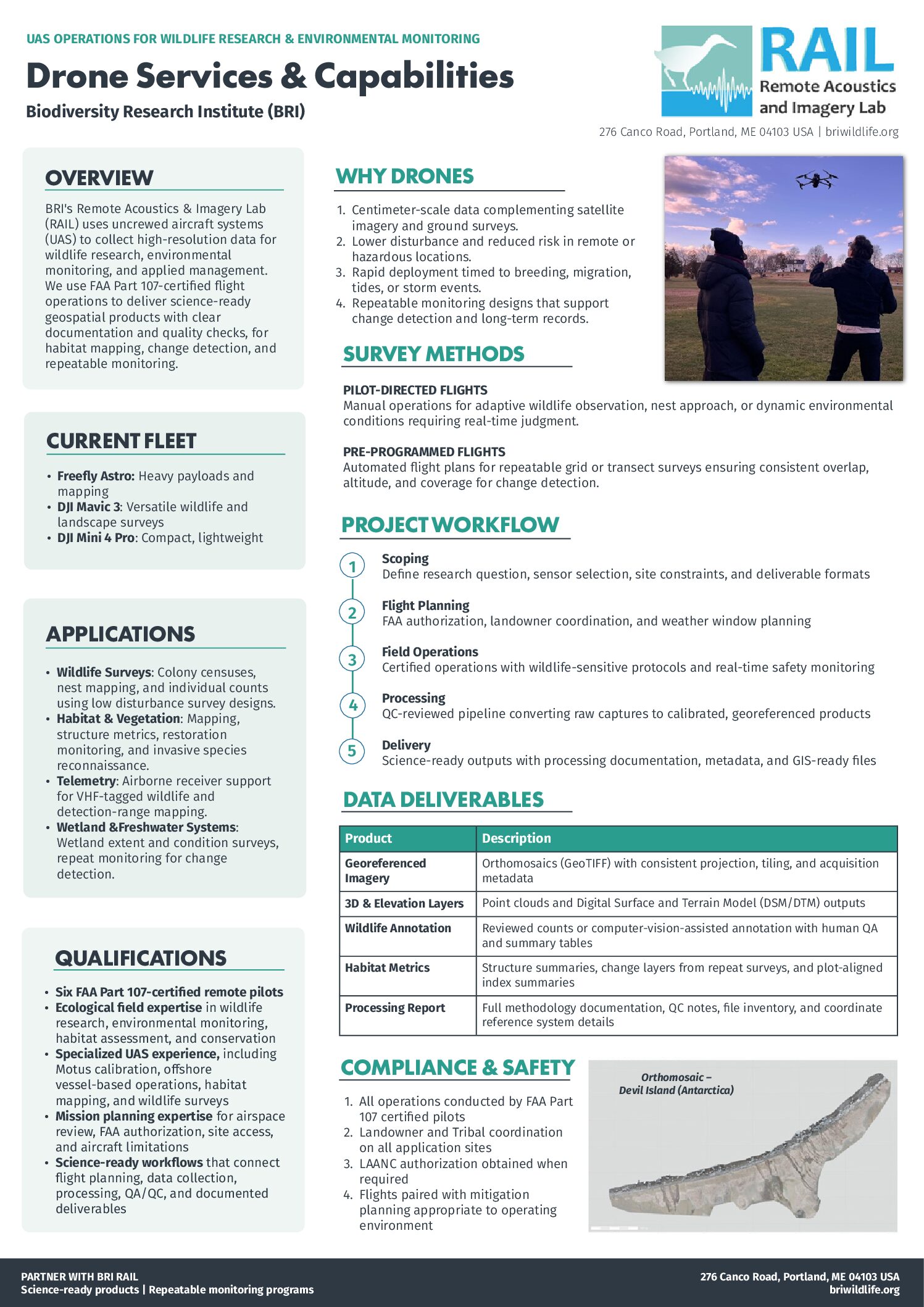
RAIL Drone Services and Capabilities: UAS Operations for Wildlife Research and Environmental Monitoring
Published: May 2026
BRI's Remote Acoustics & Imagery Lab (RAIL) uses uncrewed aircraft systems (UAS) to collect high-resolution data for wildlife research, environmental monitoring, and applied management. We use FAA Part 107-certified flight operations to deliver science-ready geospatial products with clear documentation and quality checks, for habitat mapping, change detection, and repeatable monitoring.
Document d’information sur la formation douanière au Gabon
Published: May 2026
Le présent document fournit des informations sur les présentations et les documents d’orientation de la formation des Douanes du Gabon relatifs à la gestion du commerce du mercure et aux produits contenant du mercure. Il présente un aperçu des ressources de formation élaborées pour soutenir les activités de renforcement des capacités axées sur la gestion du commerce du mercure et les produits contenant du mercure, avec un accent particulier sur les produits éclaircissants pour la peau contenant du mercure (SLP).
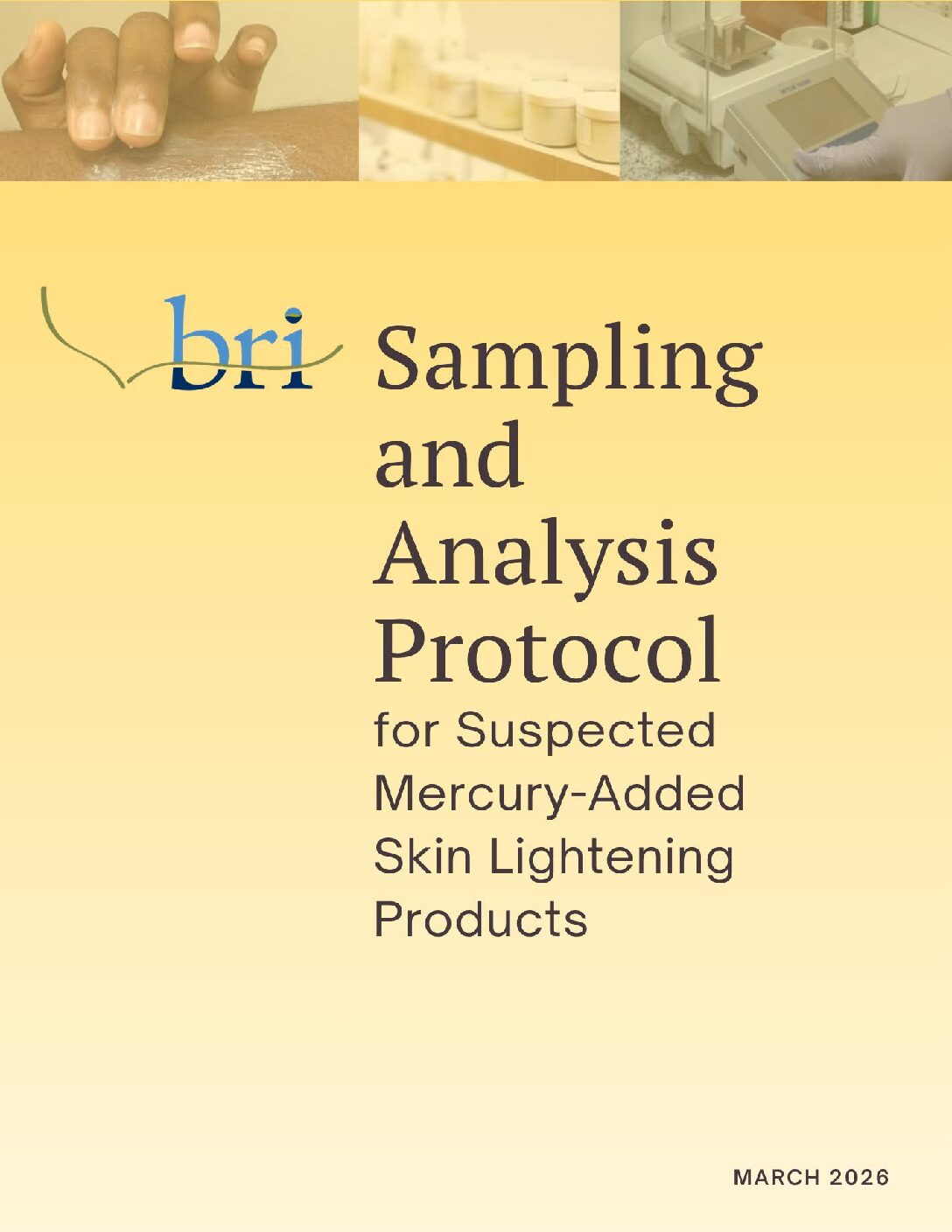
Sampling and Analysis Protocol: for suspected mercury-added skin lightening products
Published: May 2026
The following sampling protocol is based on over 1,000 skin lightening products analyzed since 2016 and work conducted under the GEF 10810 Project “Eliminating Mercury Skin Lightening Products (Jamaica, Gabon and Sri Lanka)” conducted from 2022 - 2026.
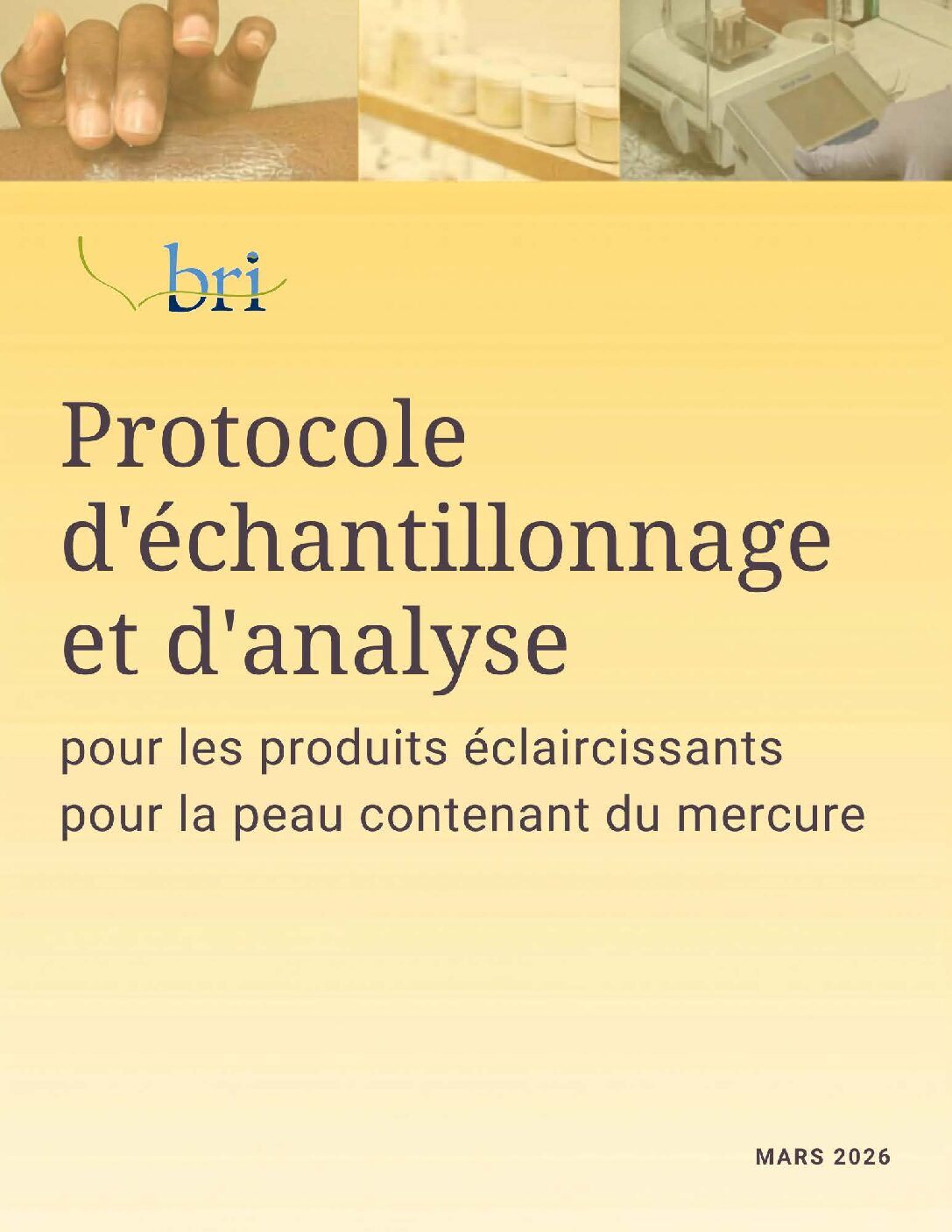
Protocole d’échantillonnage et d’analyse: pour les produits éclaircissants pour la peau contenant du mercure
Published: May 2026
Le protocole d'échantillonnage suivant s'appuie sur l'analyse de plus de 1 000 produits éclaircissants pour la peau réalisée depuis 2016 et sur les travaux menés dans le cadre du projet GEF 10810 « Élimination des produits éclaircissants pour la peau contenant du mercure (Jamaïque, Gabon et Sri Lanka) », mené de 2022 à 2026.
Jamaica – Customs and Enforcement Workshop Flier
Published: April 2026
This initiative aims to strengthen the enforcement efforts for the elimination of mercury-added skin lightening products (SLPs) in trade through knowledge sharing and i nformation exchange with Jamaica Customs Agency and related stakeholders.
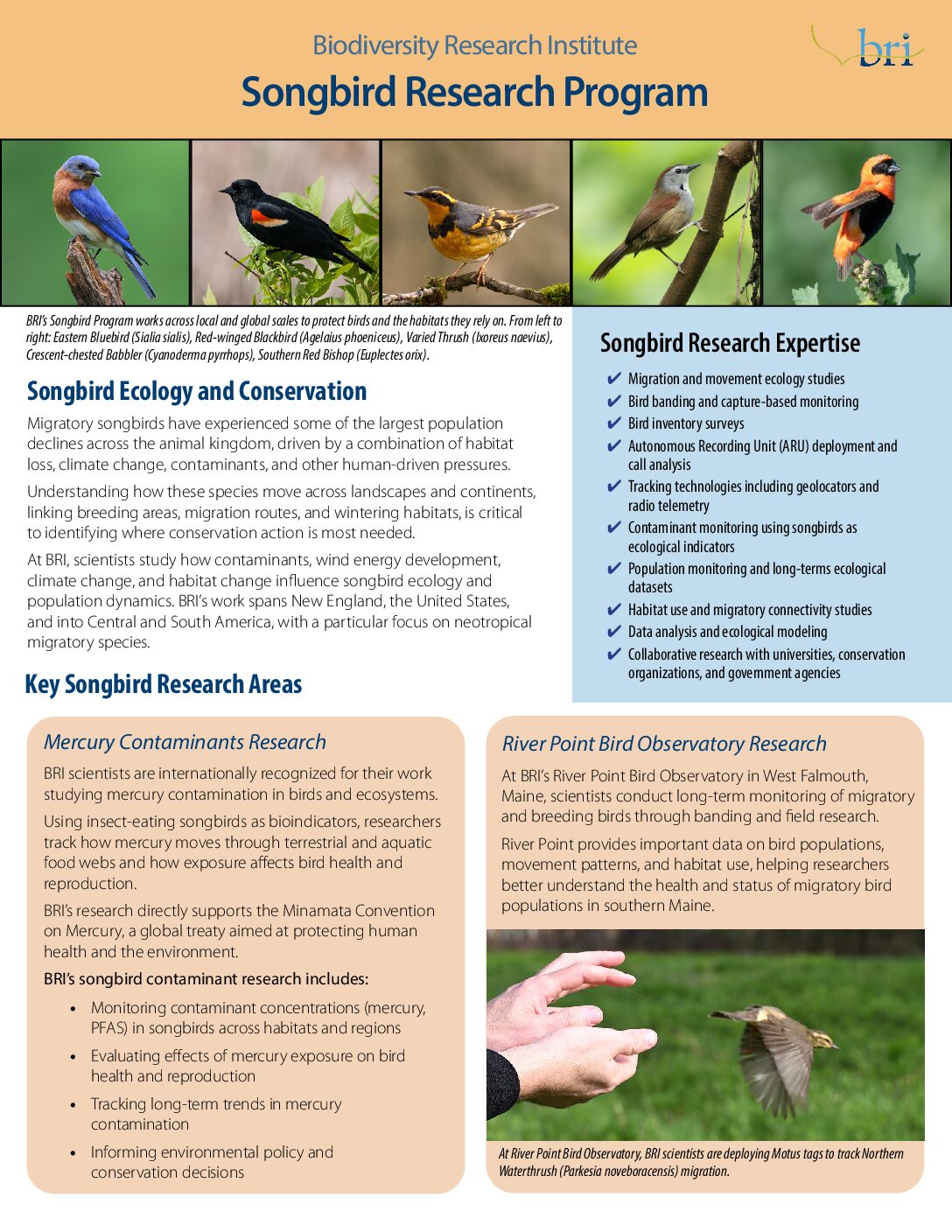
BRI Songbird Research Program 2026
Published: March 2026
Overview of BRI's ongoing songbird research initiatives, including contaminant monitoring and migratory bird banding at River Point Bird Observatory. At BRI, scientists study how contaminants, wind energy development, climate change, and habitat change influence songbird ecology and population dynamics. BRI’s work spans New England, the United States, and into Central and South America, with a particular focus on neotropical migratory species.
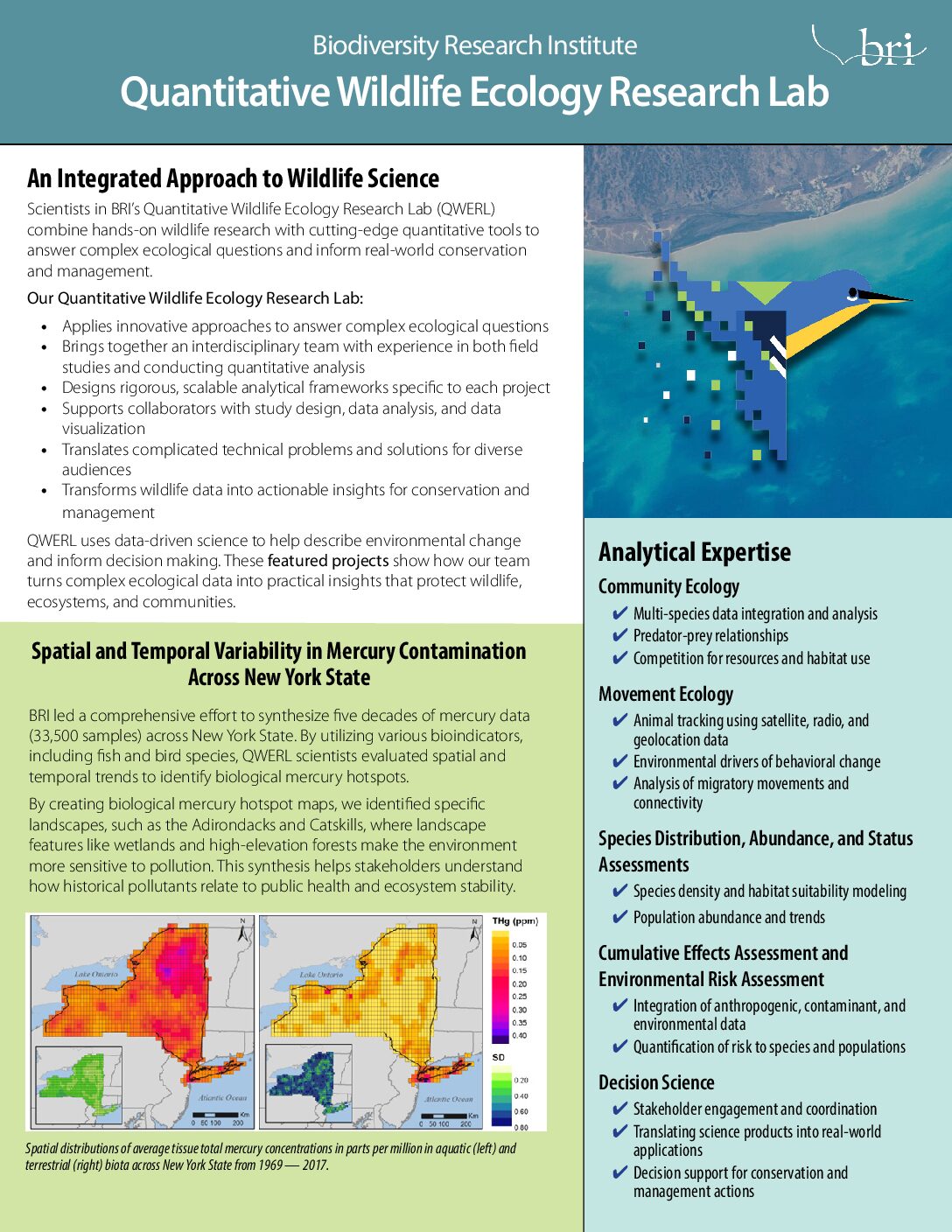
Quantitative Wildlife Ecology Research Lab 2026
Published: March 2026
Scientists in BRI’s Quantitative Wildlife Ecology Research Lab (QWERL) combine hands-on wildlife research with cutting-edge quantitative tools to answer complex ecological questions and inform real-world conservation and management.
FERC Hydropower Licensing and Compliance Fisheries and Wildlife Studies 2026
Published: February 2026
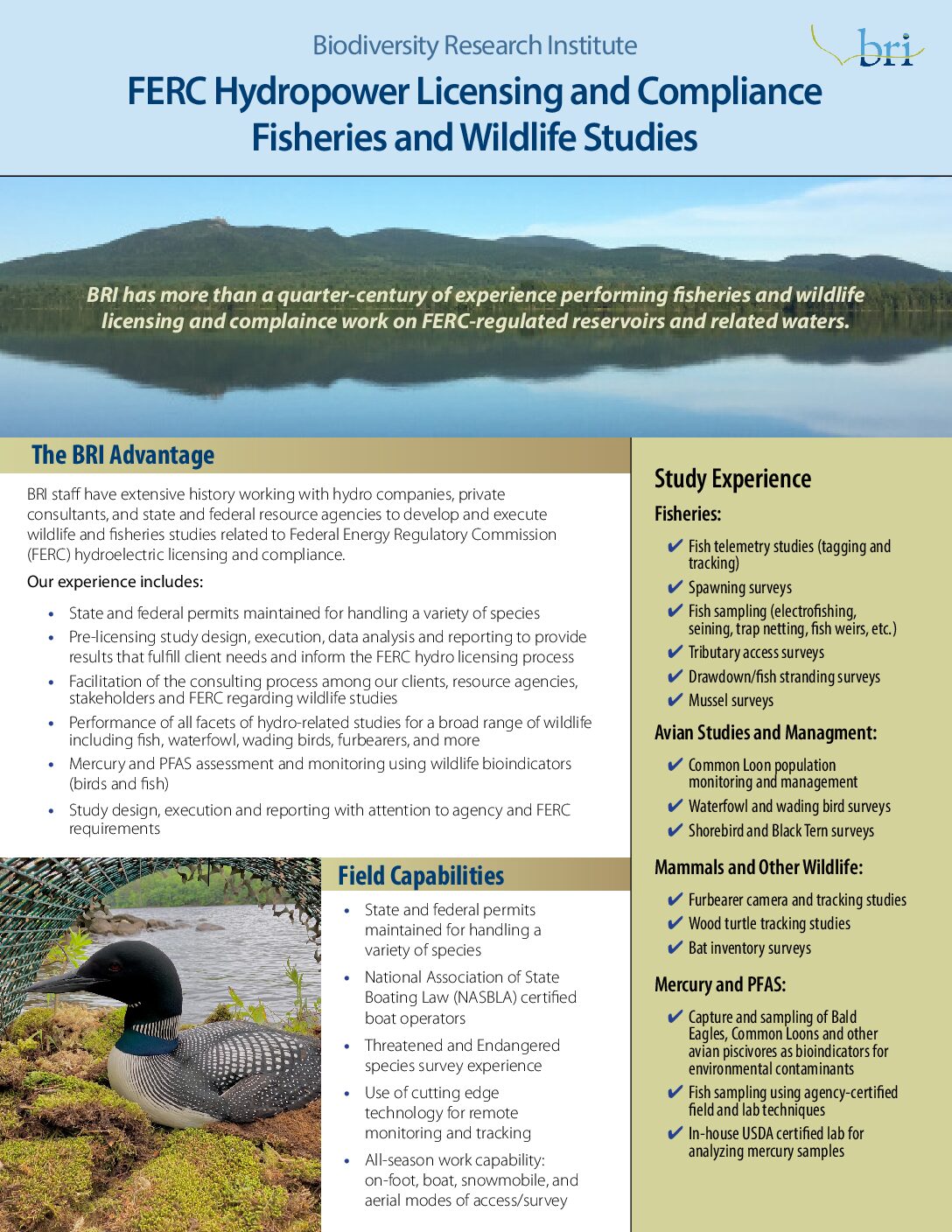
BRI staff have extensive history working with hydro companies, private consultants, and state and federal resource agencies to develop and execute wildlife and fisheries studies related to Federal Energy Regulatory Commission (FERC) hydroelectric licensing and compliance.
Threatened and Endangered Species Services 2026
Published: February 2026
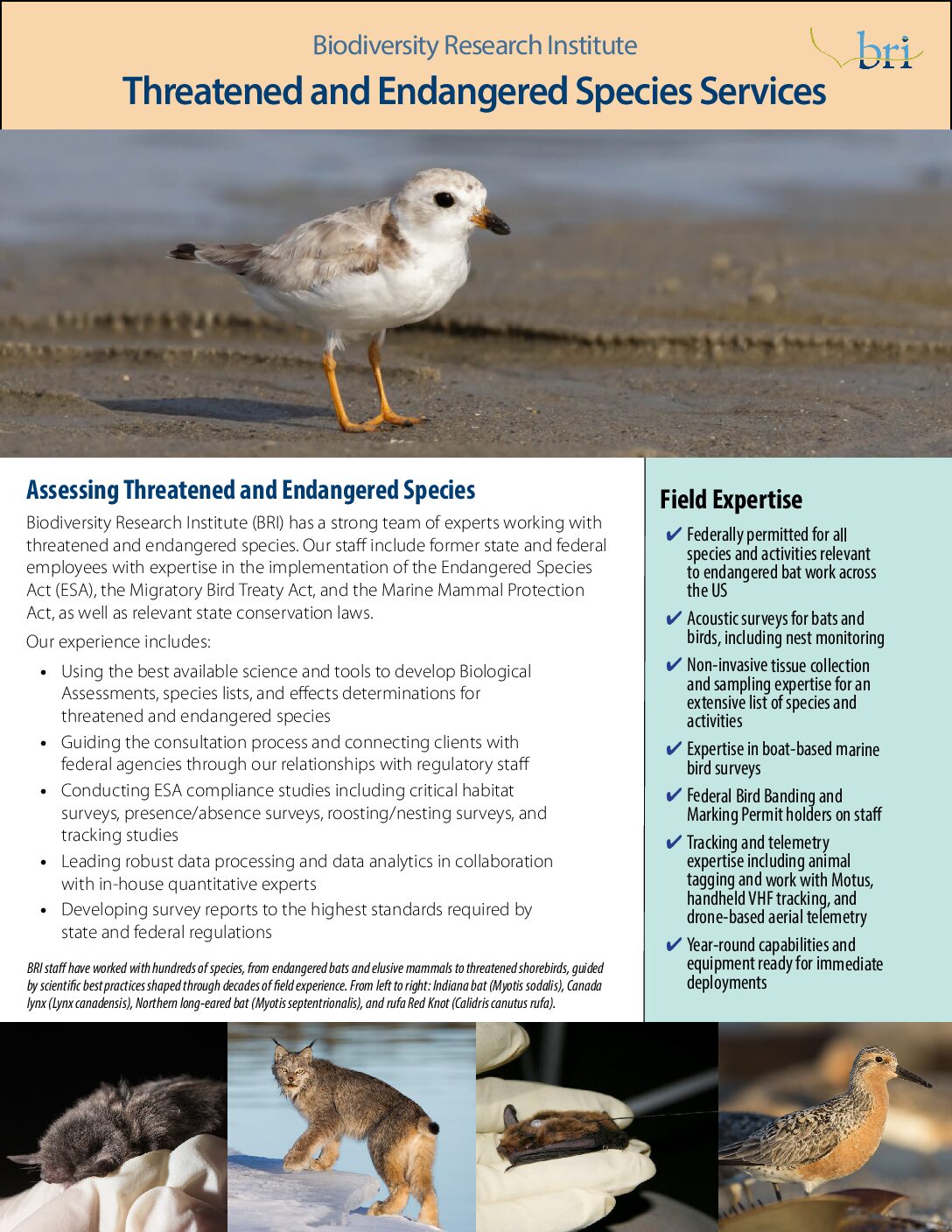
Biodiversity Research Institute (BRI) has a strong team of experts working with threatened and endangered species. Our staff include former state and federal employees with expertise in the implementation of the Endangered Species Act (ESA), the Migratory Bird Treaty Act, and the Marine Mammal Protection Act, as well as relevant state conservation laws.
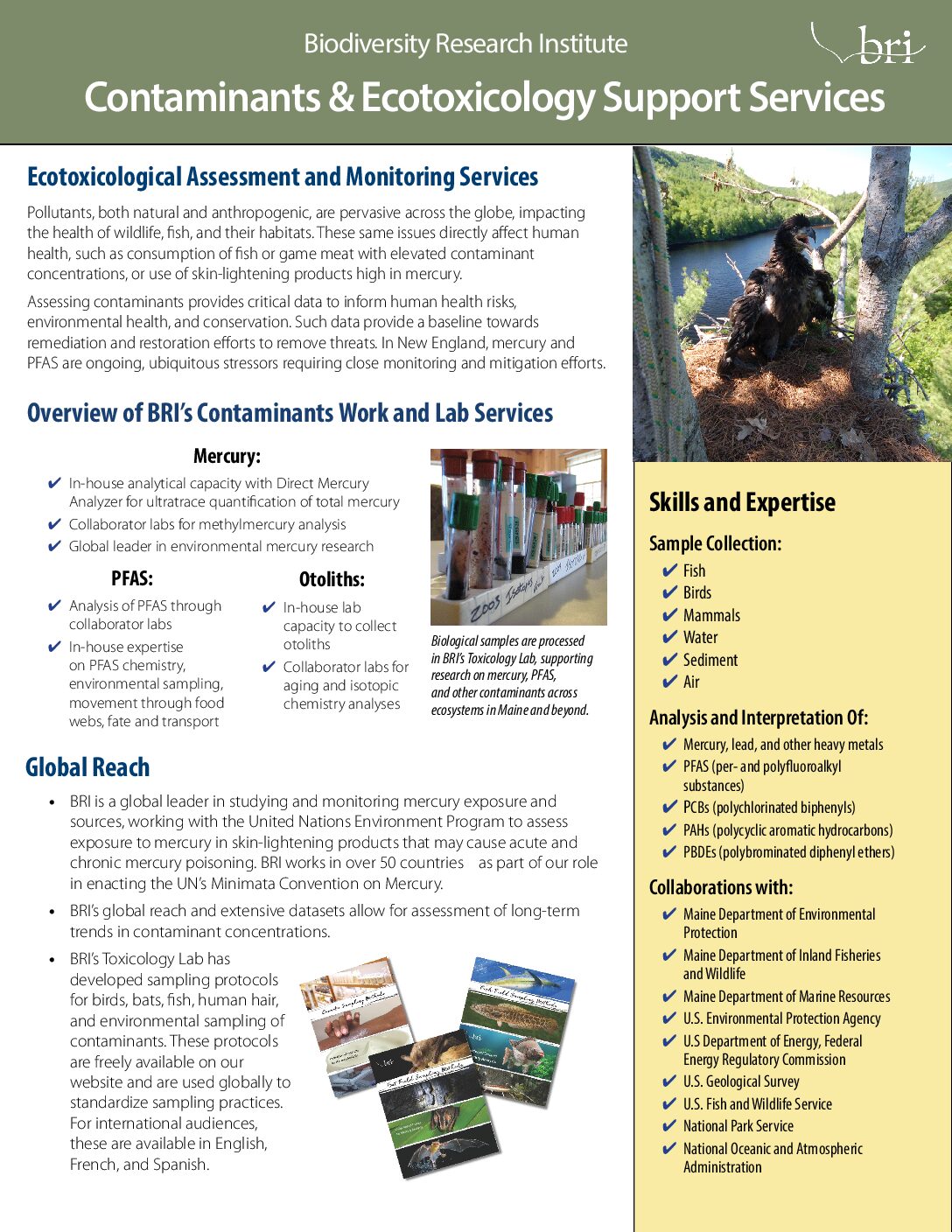
Contaminants and Ecotoxicology Support Services 2026
Published: February 2026
Assessing contaminants provides critical data to inform human health risks, environmental health, and conservation. Such data provide a baseline towards remediation and restoration efforts to remove threats. In New England, mercury and PFAS are ongoing, ubiquitous stressors requiring close monitoring and mitigation efforts.
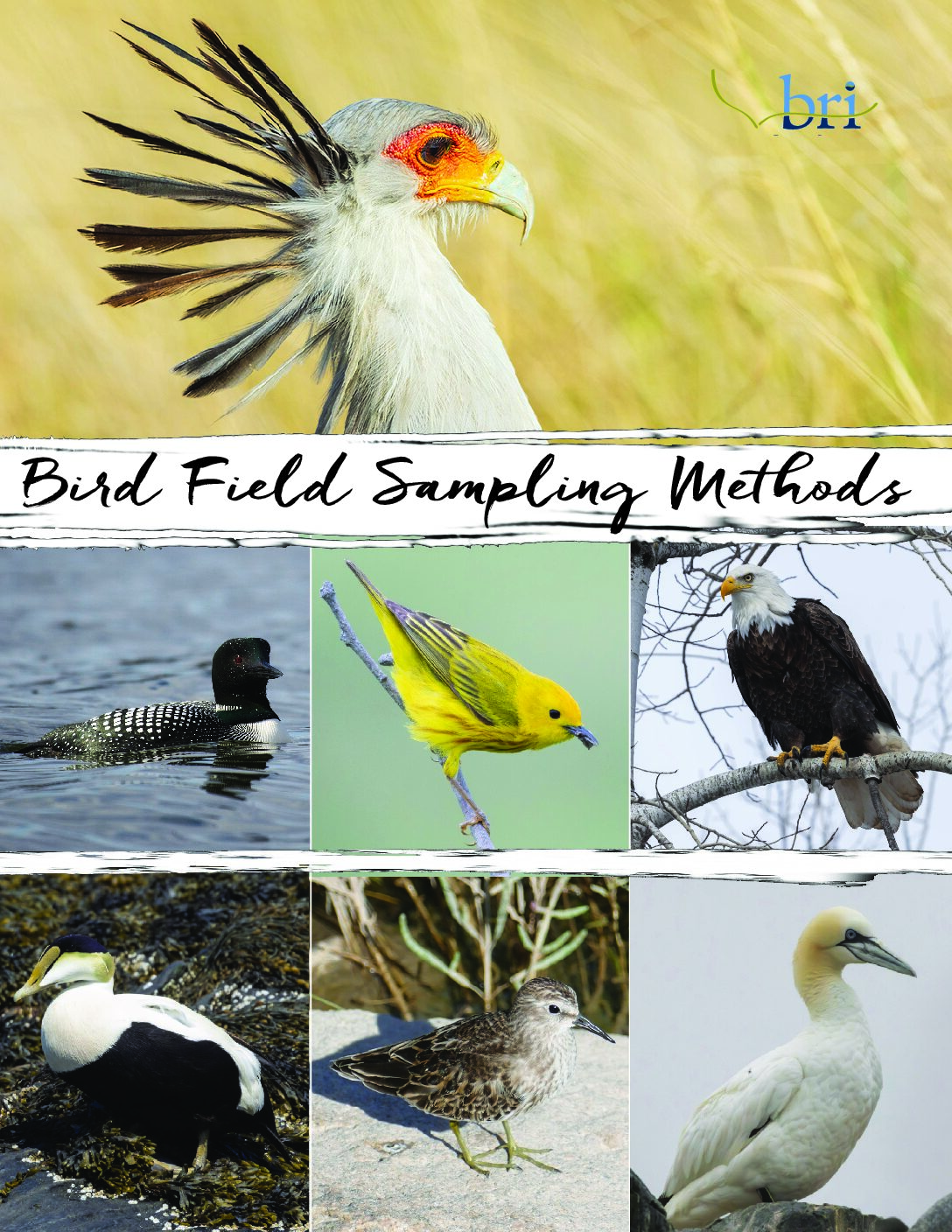
Bird Field Sampling Methods: Collection, Storage and Analyses of Avian Tissue Samples
Published: December 2025
Sampling of birds for blood, feathers, and other tissues can be informative for various aspects of diet, contaminants, exposure, movements, and health. The specific tissues chosen for these endpoints, however, will vary based on the life history of the focal species, season of sampling, and the research objective(s) to be addressed.
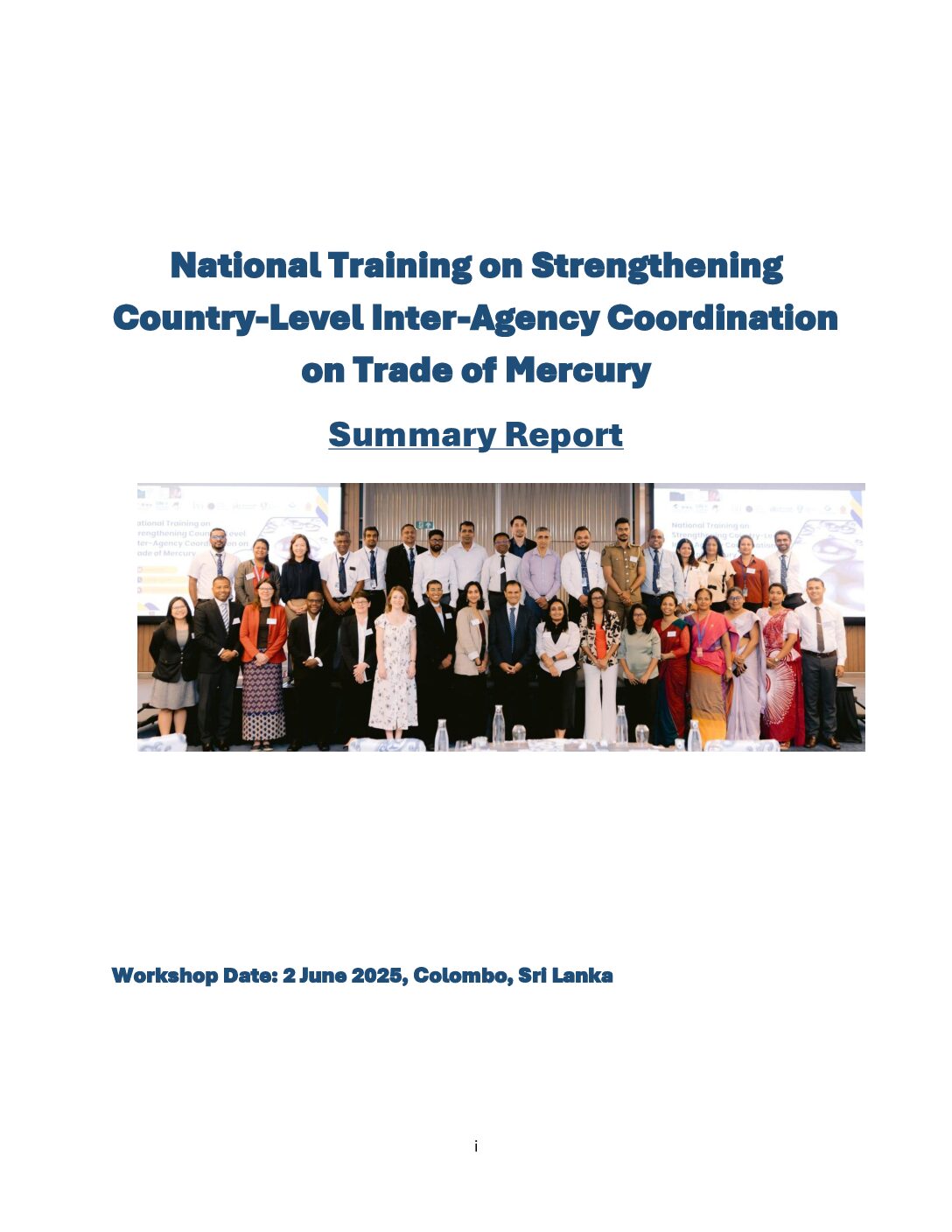
National Training Summary Report: Sri Lanka 2025
Published: December 2025
National Training on Strengthening Country-Level Inter-Agency Coordination on Trade of Mercury. A one-day in-person national training workshop was developed to provide practical guidance on combatting issues related to the trade of mercury, mercury compounds and mercury-added products (such as mercury-added skin lightening products) in alignment with the Minamata Convention on Mercury.
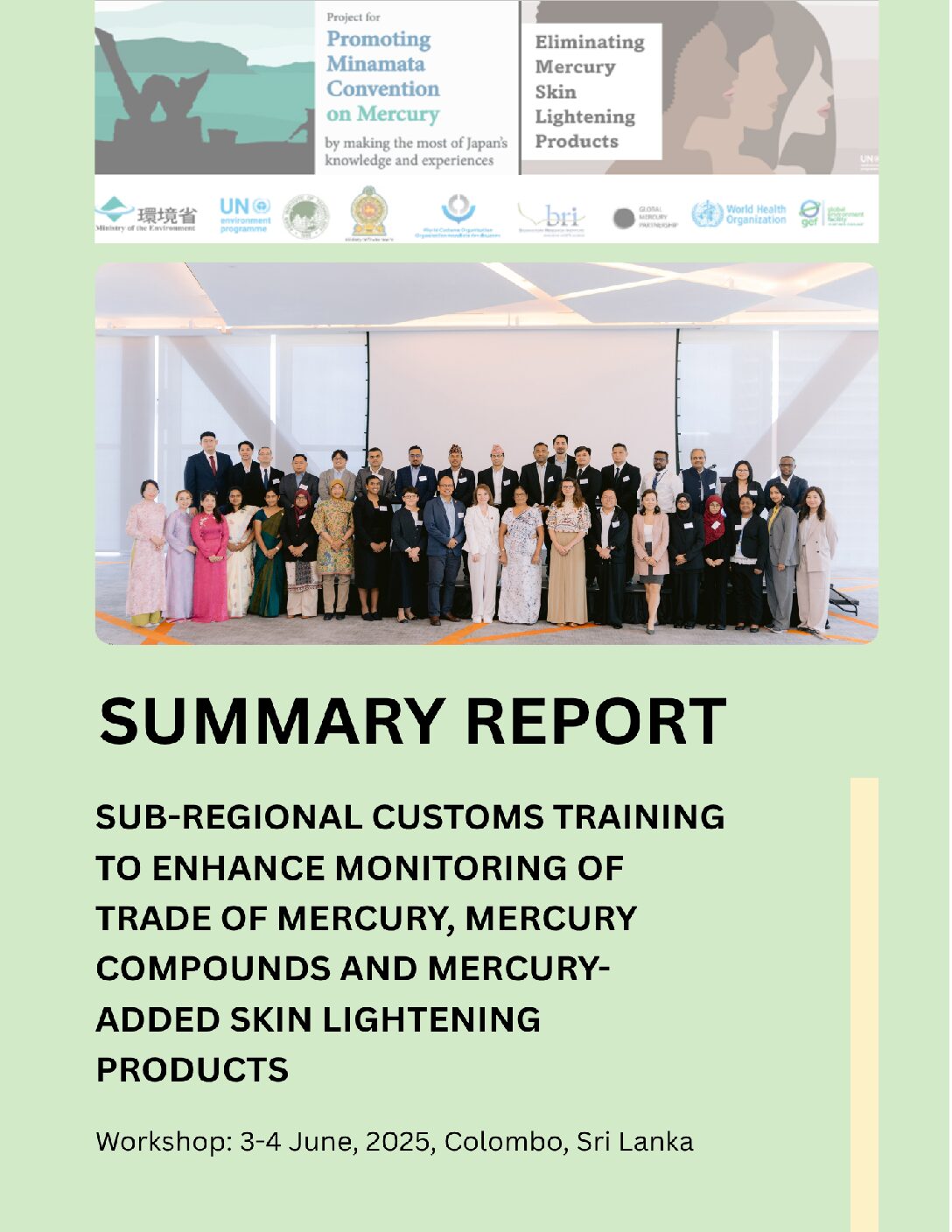
Customs Training Summary Report: Sri Lanka 2025
Published: December 2025
Sub-regional customs training to enhance monitoring of trade of mercury, mercury compounds, and mercury-added skin lightening products. A two-day in-person sub-regional training workshop was developed to equip customs officers, environmental regulators, and law enforcement agencies with the guidance to detect and control mercury trade. Key areas of focus include regulatory compliance, risk assessment, intelligence-sharing, and forensic analysis.
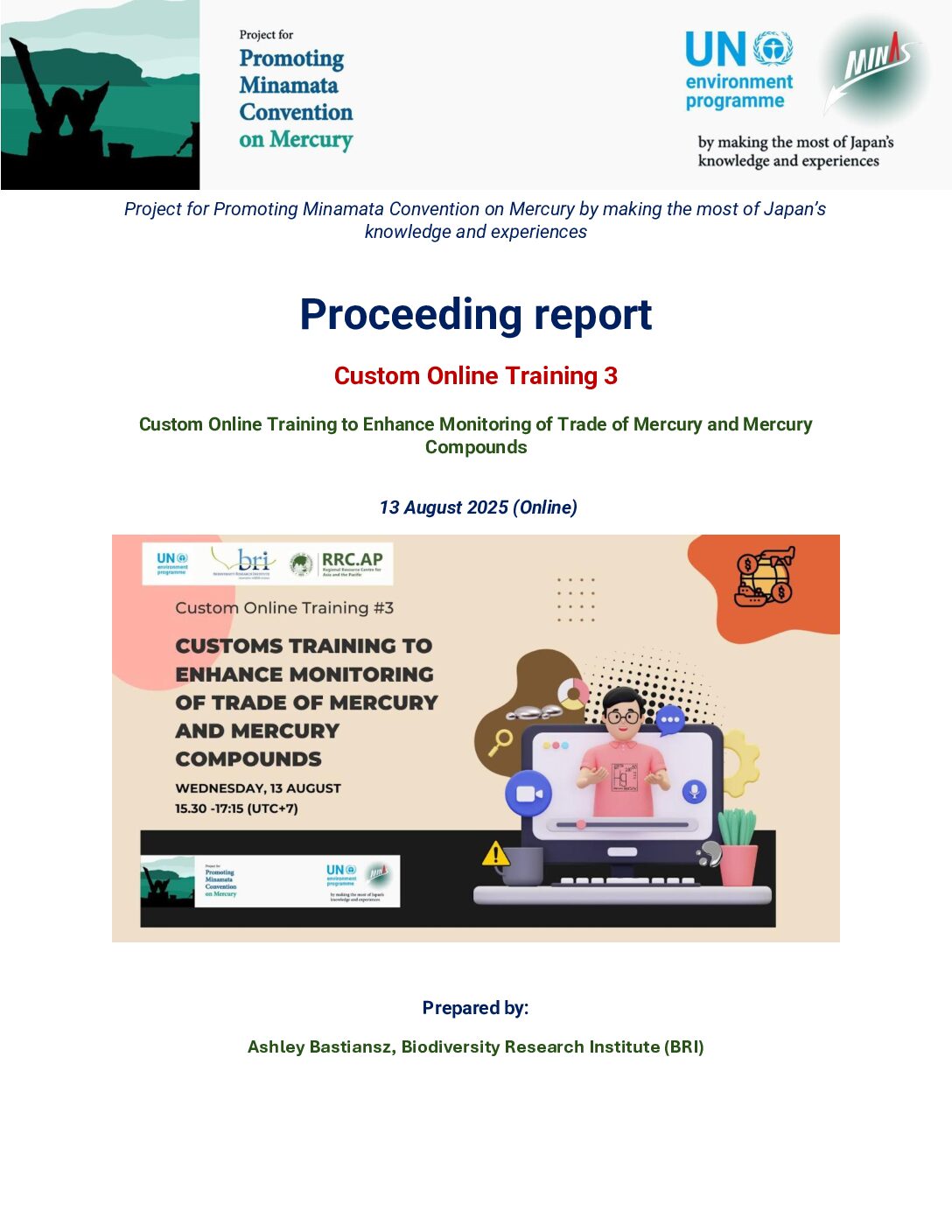
Proceeding Report: Custom Online Training 3
Published: December 2025
The Online Custom Training on Monitoring the Trade of Mercury and Mercury Compounds, held on 13 August 2025, is part of a broader effort to build national capacity in support of the Minamata Convention on Mercury. The Convention is a key multilateral environmental agreement aimed at protecting human health and the environment from anthropogenic emissions and releases of mercury and mercury compounds. This training is organized under the Japan-funded United Nations Environment Programme (UNEP) project titled “Project for Promoting the Minamata Convention on Mercury by Making the Most of Japan’s Knowledge and Experiences.” The project seeks to strengthen implementation by facilitating information exchange, awareness-raising, education, and technical capacity building among participating countries. Specifically, this session focused on Best Practices/Available Resources for Managing Mercury Trade and targeted customs authorities, ministries of environment and health, and other relevant stakeholders, with the goal of enhancing their understanding and practical ability to monitor and control mercury trade.
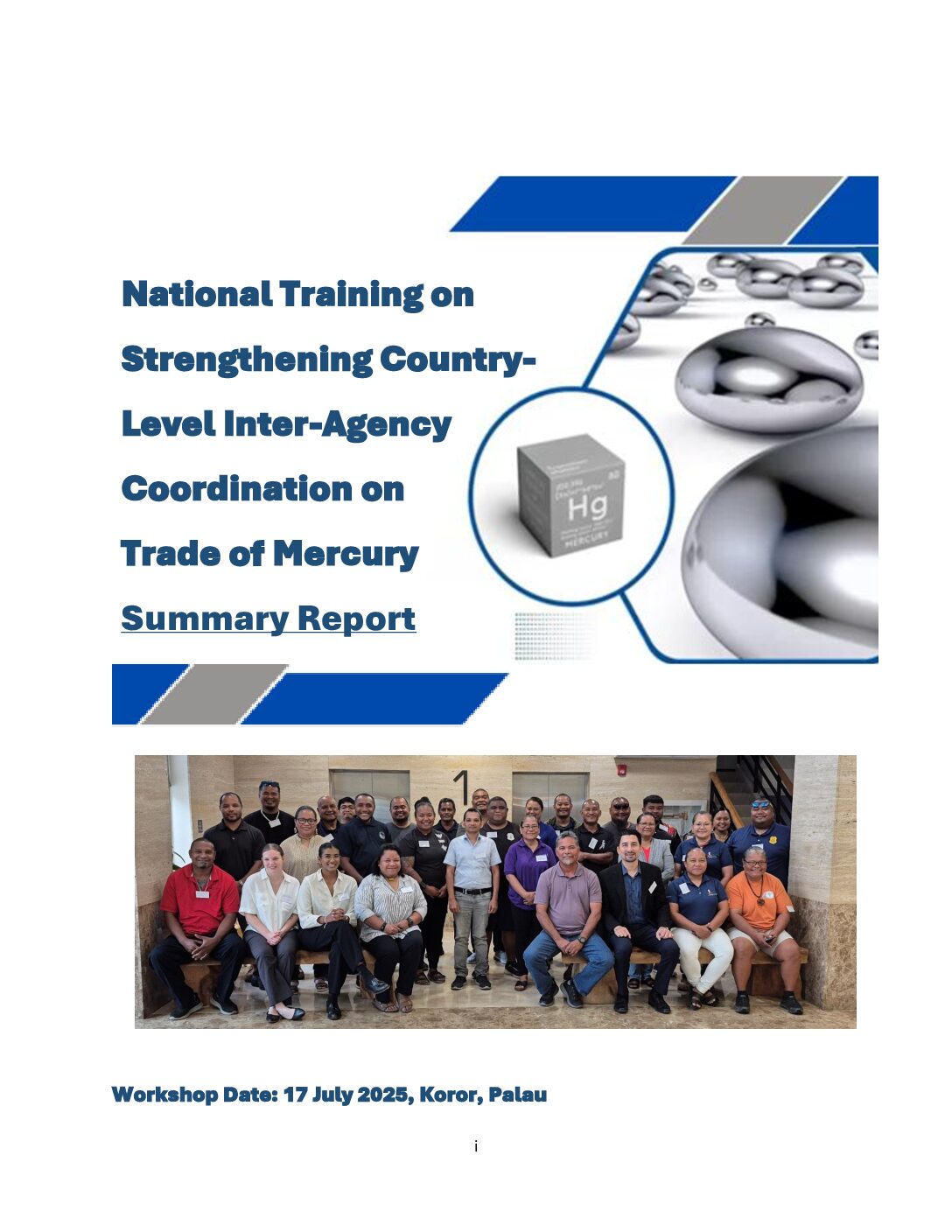
National Training Summary Report: Palau 2025
Published: December 2025
A one-day in-person National Training workshop was developed to provide practical guidance on combatting issues related to the trade of mercury, mercury compounds and mercury-added products (MAPs) in alignment with the Minamata Convention on Mercury. This activity was a joint initiative developed under the Japan-funded “Project for promoting the Minamata Convention on Mercury by making the most of Japan's knowledge and experiences to support Parties in the implementation of the Convention” implemented regionally by UNEP. The project has a special focus on the area of information exchange, awareness and education, research, development, and monitoring.
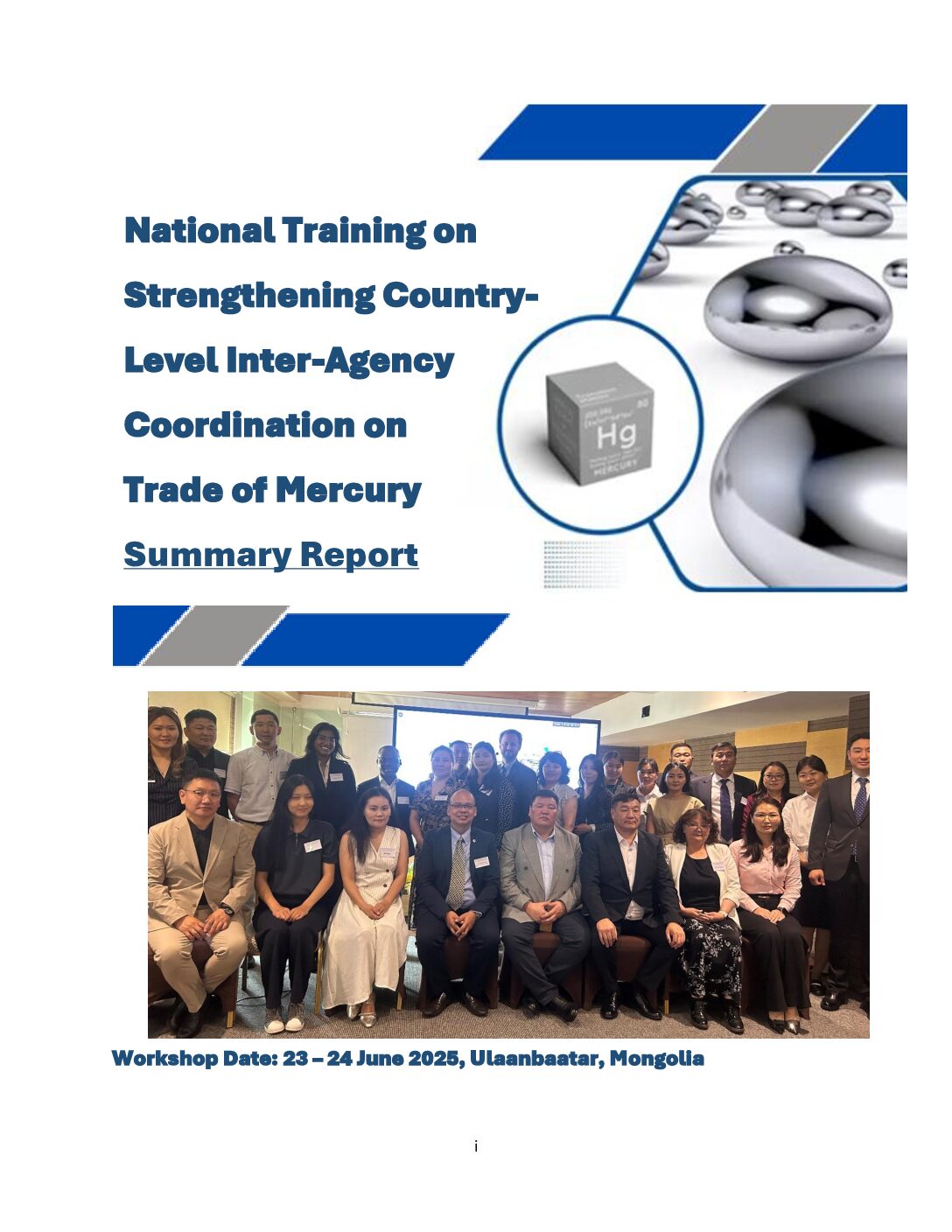
National Training Summary Report: Mongolia 2025
Published: December 2025
A one and a half day in-person National Training workshop was developed to provide practical guidance on combatting issues related to the trade of mercury, mercury compounds and mercury-added products (MAPs) in alignment with the Minamata Convention on Mercury. This activity was a joint initiative developed under the Japanfunded “Project for promoting the Minamata Convention on Mercury by making the most of Japan's knowledge and experiences to support Parties in the implementation of the Convention” implemented regionally by UNEP. The project has a special focus on the area of information exchange, awareness and education, research, development, and monitoring.
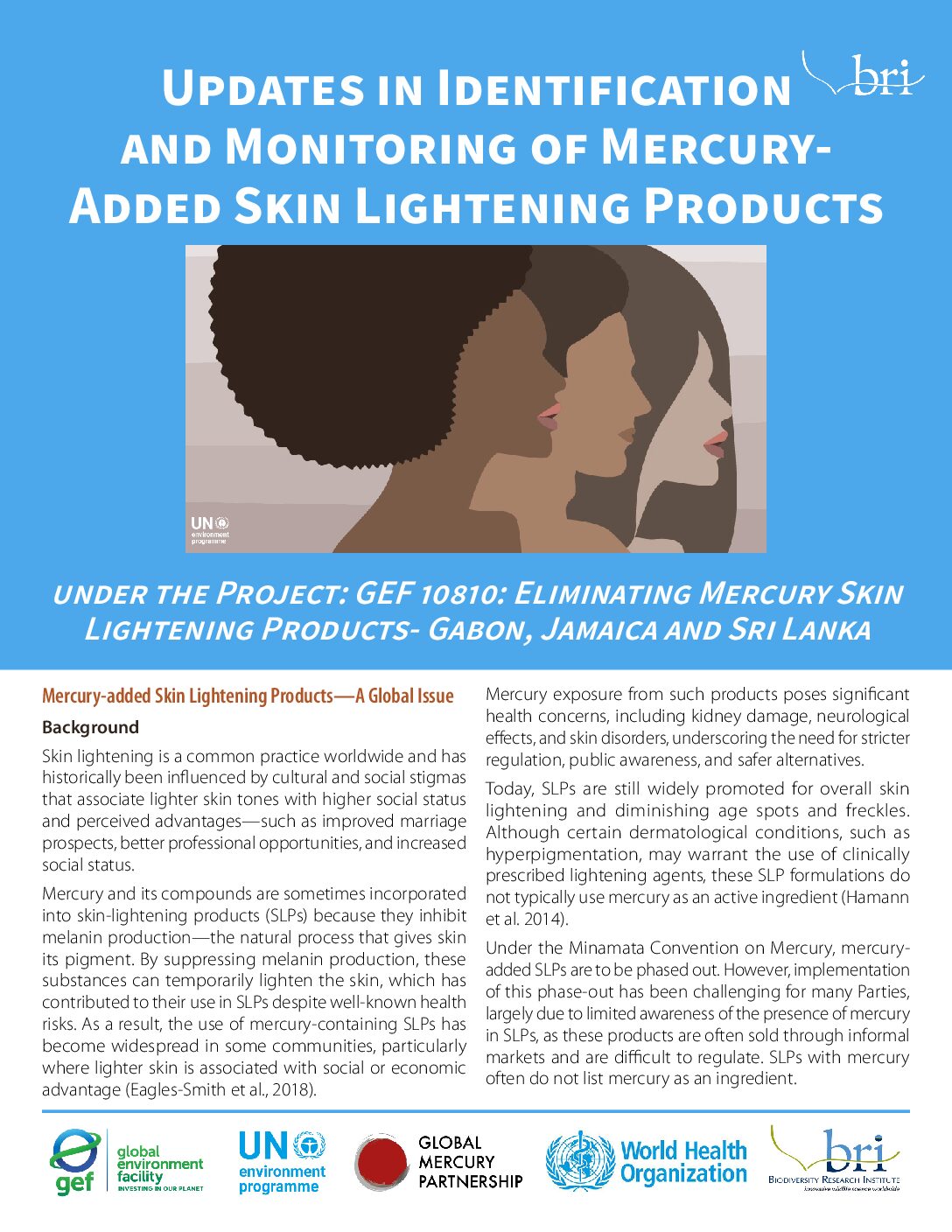
Updates in Identification and Monitoring of Mercury-added Skin Lightening Products: under the Project: GEF 10810: Eliminating Mercury Skin Lightening Products – Gabon, Jamaica, and Sri Lanka
Published: November 2025
The use of skin lightening products is widespread across the globe. To enable the engagement of each key region where skin lightening is more prevalent, Jamaica, Gabon, and Sri Lanka were engaged to provide insight into the prevalence of the issue in the Caribbean, African, and Asian regions respectively.
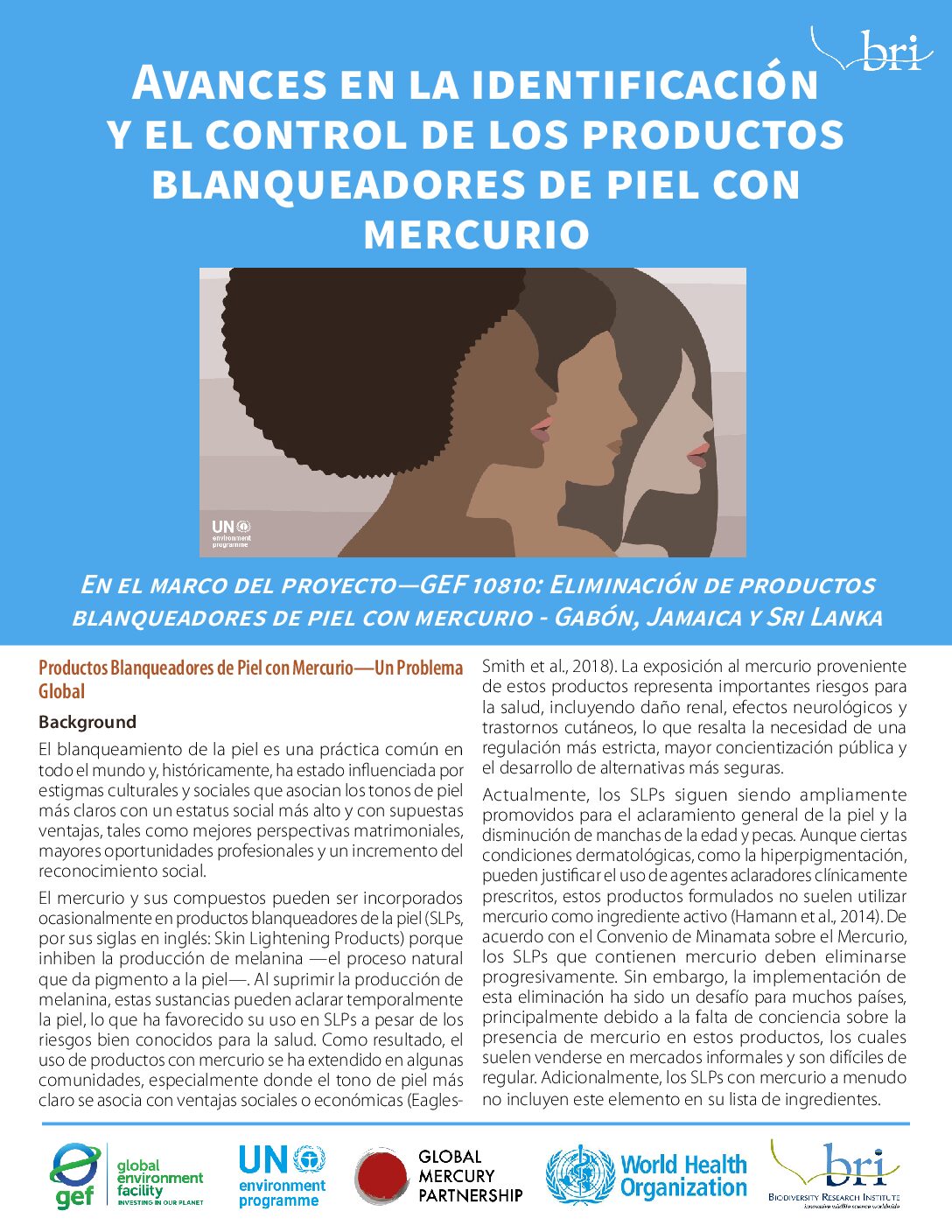
Avances en la identificación y el control de los productos blanqueadores de piel con mercurio: En el marco del proyecto—GEF 10810: Eliminación de productos blanqueadores de piel con mercurio – Gabón, Jamaica y Sri Lanka
Published: November 2025
El uso de productos blanqueadores de piel está ampliamente extendido a nivel global. Para garantizar la participación de las regiones donde esta práctica es más común, Jamaica, Gabón y Sri Lanka fueron seleccionados para ofrecer una representación geográfica y ofrecer información sobre la prevalencia del problema en el Caribe, África y Asia, respectivamente.
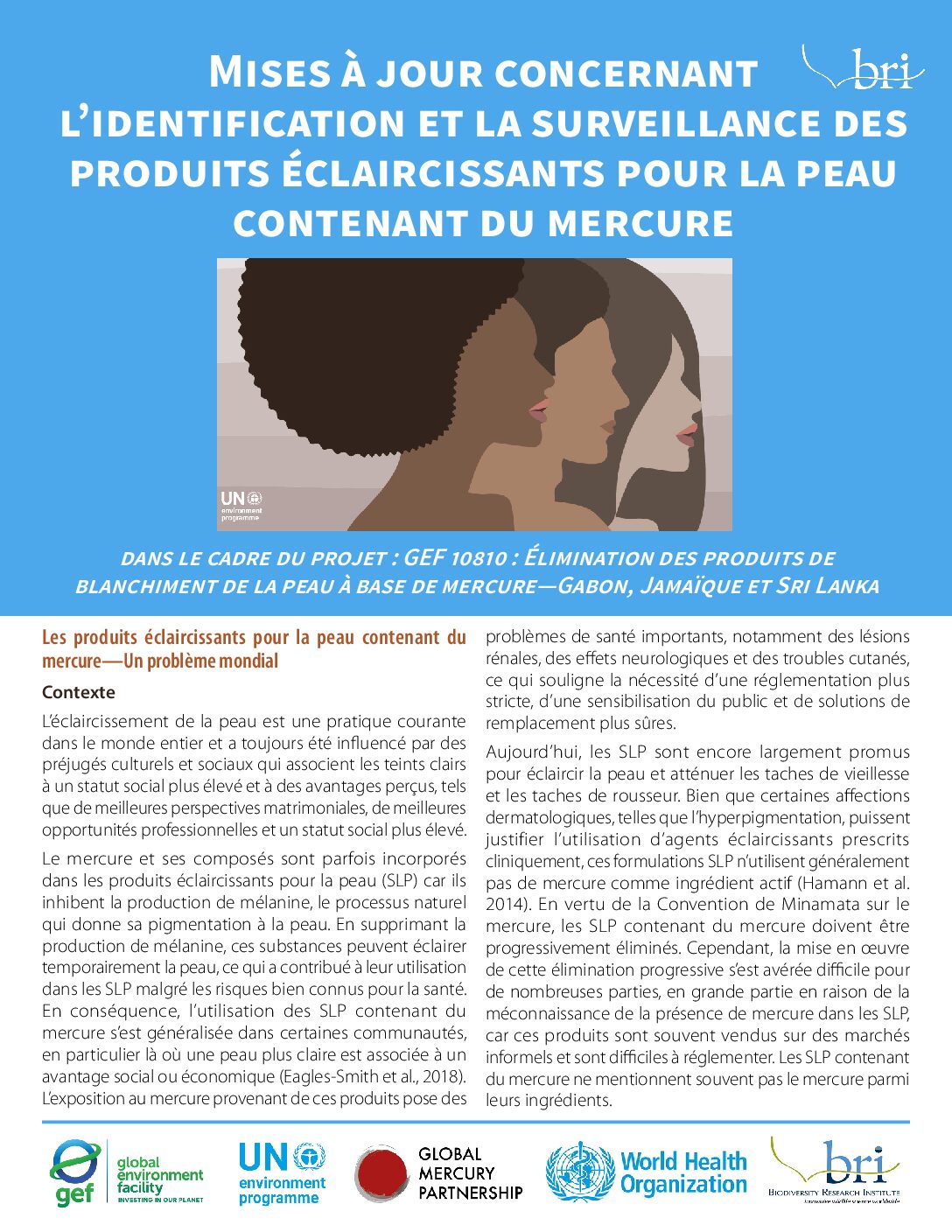
Mises à jour concernant l’identification et la surveillance des produits éclaircissants pour la peau contenant du mercure: dans le cadre du projet : GEF 10810 : Élimination des produits de blanchiment de la peau à base de mercure—Gabon, Jamaïque et Sri Lanka
Published: November 2025
L’utilisation de produits éclaircissants pour la peau est très répandue à travers le monde. Afin de permettre l’engagement de chaque région clé où l’éclaircissement de la peau est plus prévalent, la Jamaïque, le Gabon et le Sri Lanka ont été sollicités pour fournir des informations sur la prévalence du problème dans les régions des Caraïbes, d’Afrique et d’Asie respectivement.
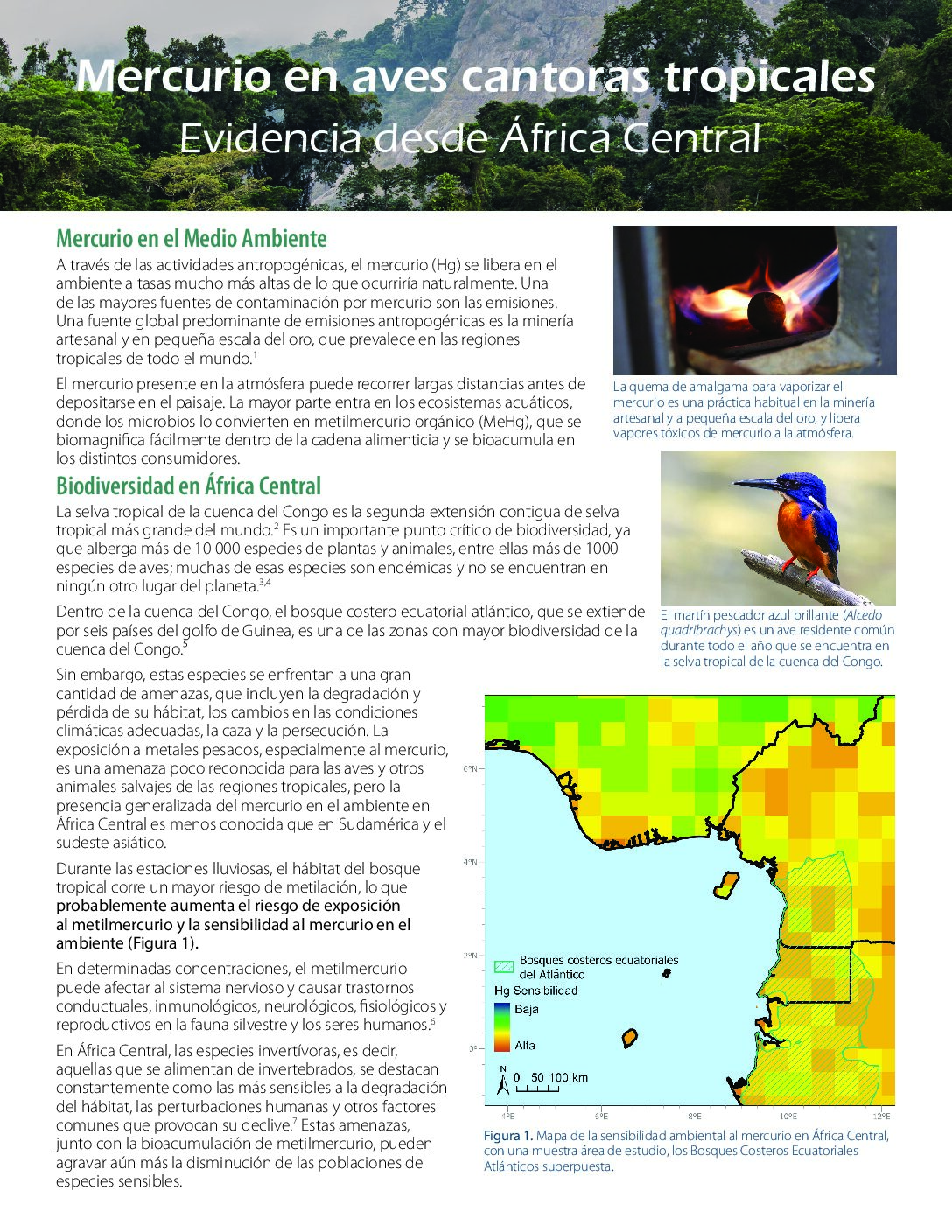
Mercurio en aves cantoras tropicales: Evidencia desde África Central
Published: October 2025
Los investigadores del BRI realizaron un esfuerzo de muestreo en la provincia de Djibloho, Guinea Ecuatorial, utilizando redes de niebla, trabajando junto a científicos de la Iniciativa de Biodiversidad y del Instituto Nacional de Desarrollo Forestal y Manejo del Sistema de Áreas Protegidas (INDEFOR-AP) para cuantificar las concentraciones de mercurio en las aves.
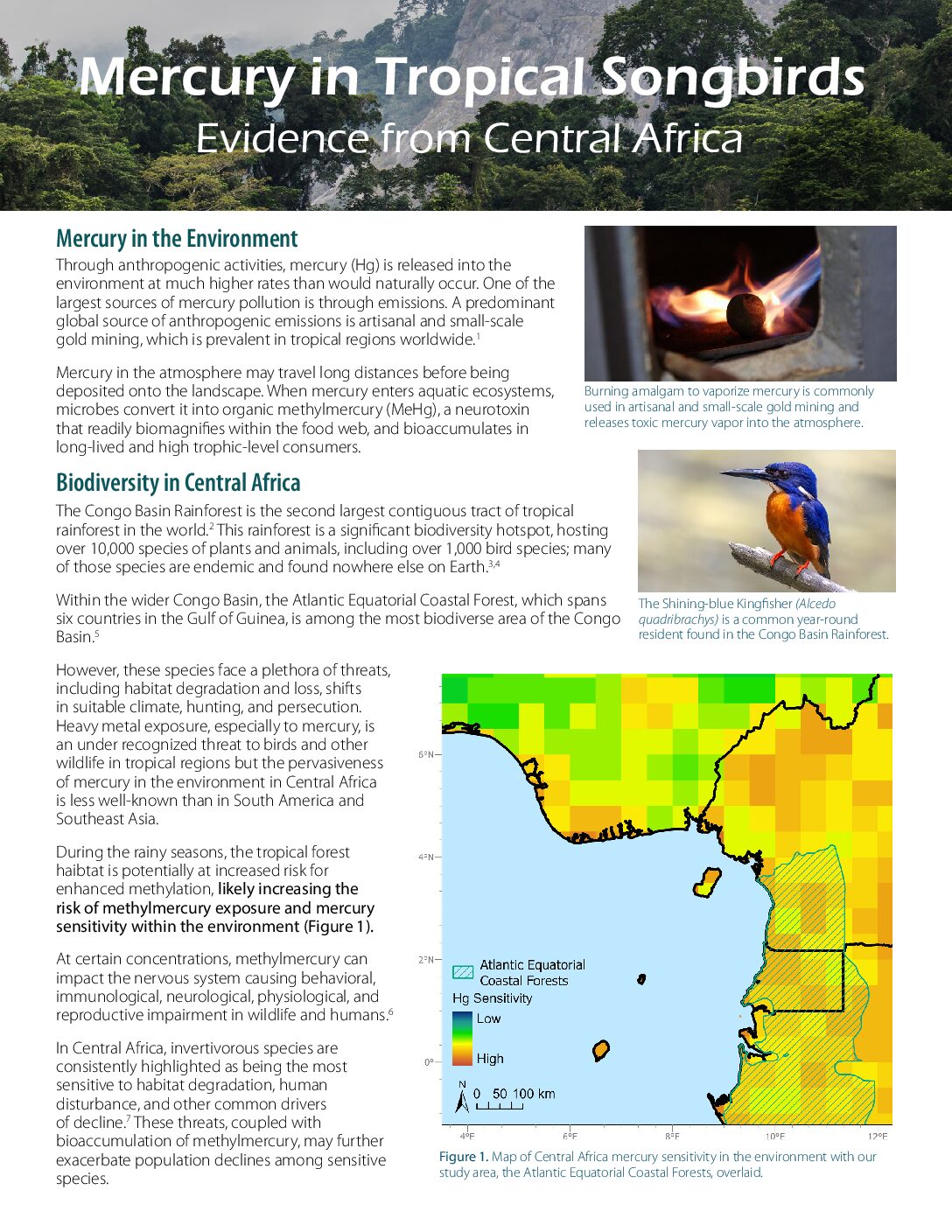
Mercury in Tropical Songbirds: Evidence from Central Africa
Published: October 2025
BRI researchers undertook a sampling effort in Djibloho Province, Equatorial Guinea, using mist nets, working alongside scientists from Biodiversity Initiative and El Instituto Nacional de Desarrollo Forestal y Manejo del Sistema de Áreas Protegidas (INDEFOR-AP) to quantify mercury concentrations in birds.
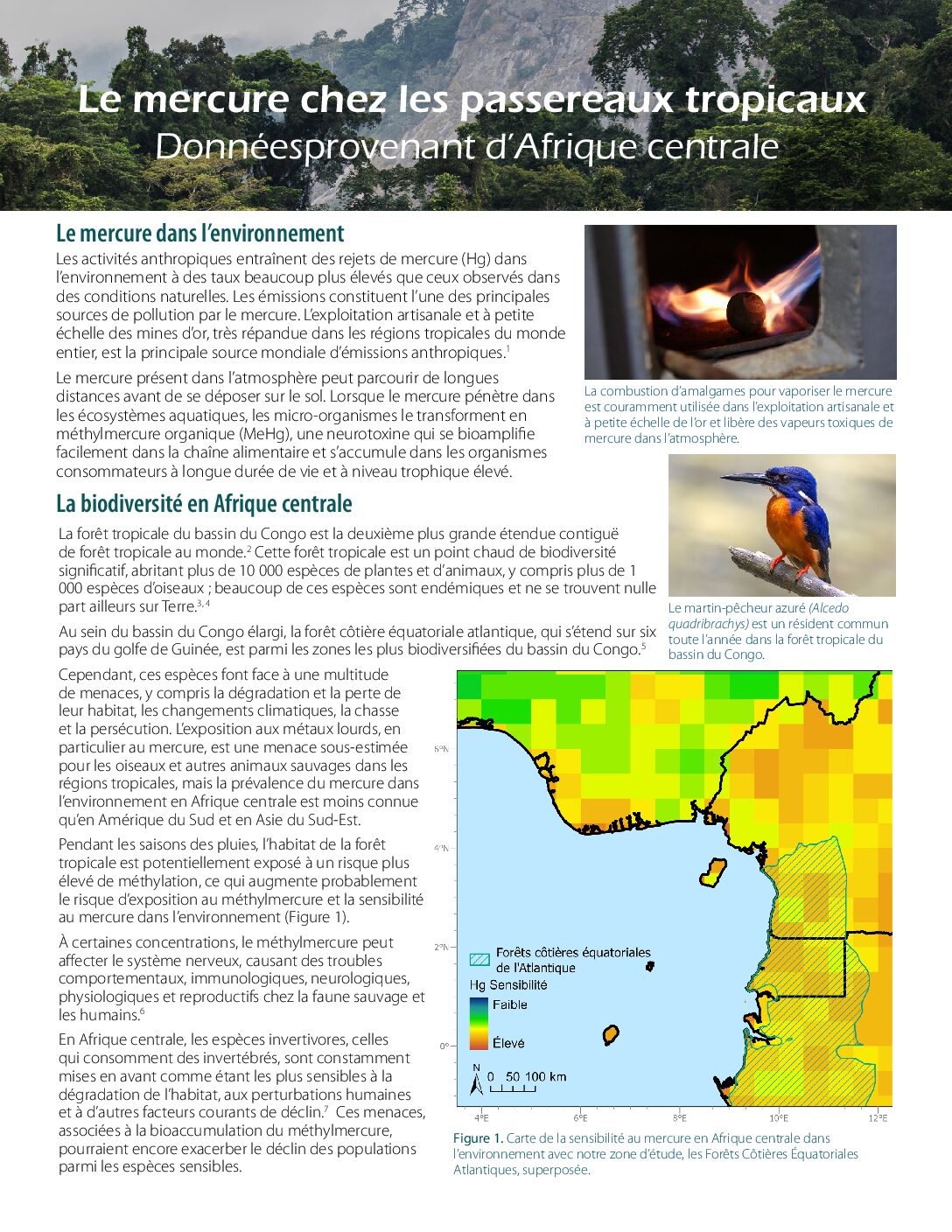
Le mercure chez les passereaux tropicaux: Donnéesprovenant d’Afrique centrale
Published: October 2025
Les chercheurs du BRI ont entrepris un effort d’échantillonnage dans la province de Djibloho, en Guinée équatoriale, en utilisant des filets de brouillard, en collaboration avec des scientifiques de l’Initiative pour la biodiversité et de l’Instituto Nacional de Desarrollo Forestal y Manejo del Sistema de Áreas Protegidas (INDEFOR-AP) pour quantifier les concentrations de mercure chez les oiseaux.
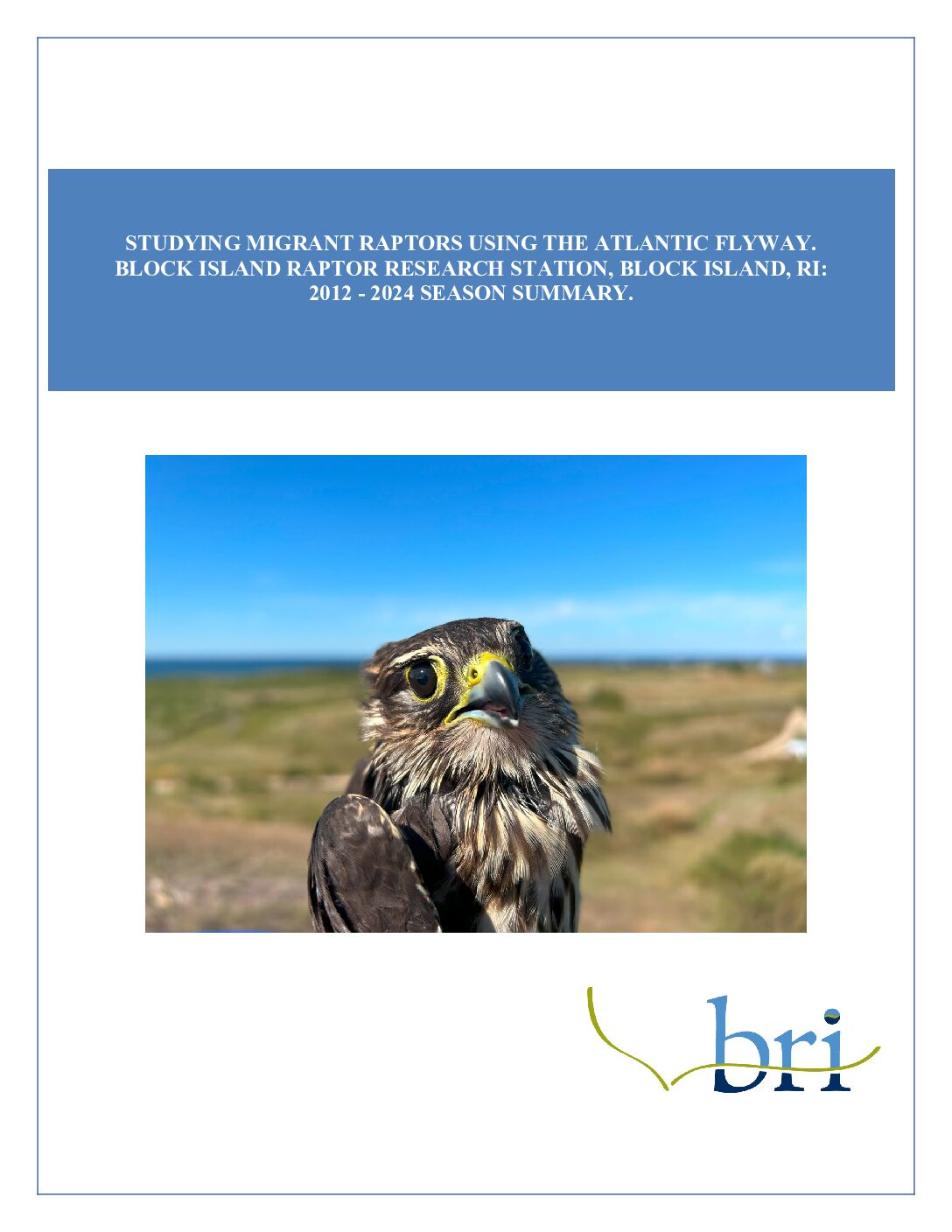
Studying Migrant Raptors Using the Atlantic Flyway: Block Island Raptor Research Station, Block Island, RI: 2012 – 2024 Season Summary
Published: July 2025
During fall seasons of 2012–2024, we operated the Block Island Raptor Research Station (BIRRS) on Block Island, Rhode Island to enable multiple ongoing research investigations on migrant raptors.
Bat Acoustic Monitoring in the Gulf of Maine: Preliminary 2024 Results
Published: June 2025
With support from Maine Department of Inland Fisheries and Wildlife (IFW), from July— October 2024, the Biodiversity Research Institute (BRI) conducted a bat acoustic monitoring effort in the Gulf of Maine to better understand offshore bat activity in the context of forthcoming offshore wind development in the region.
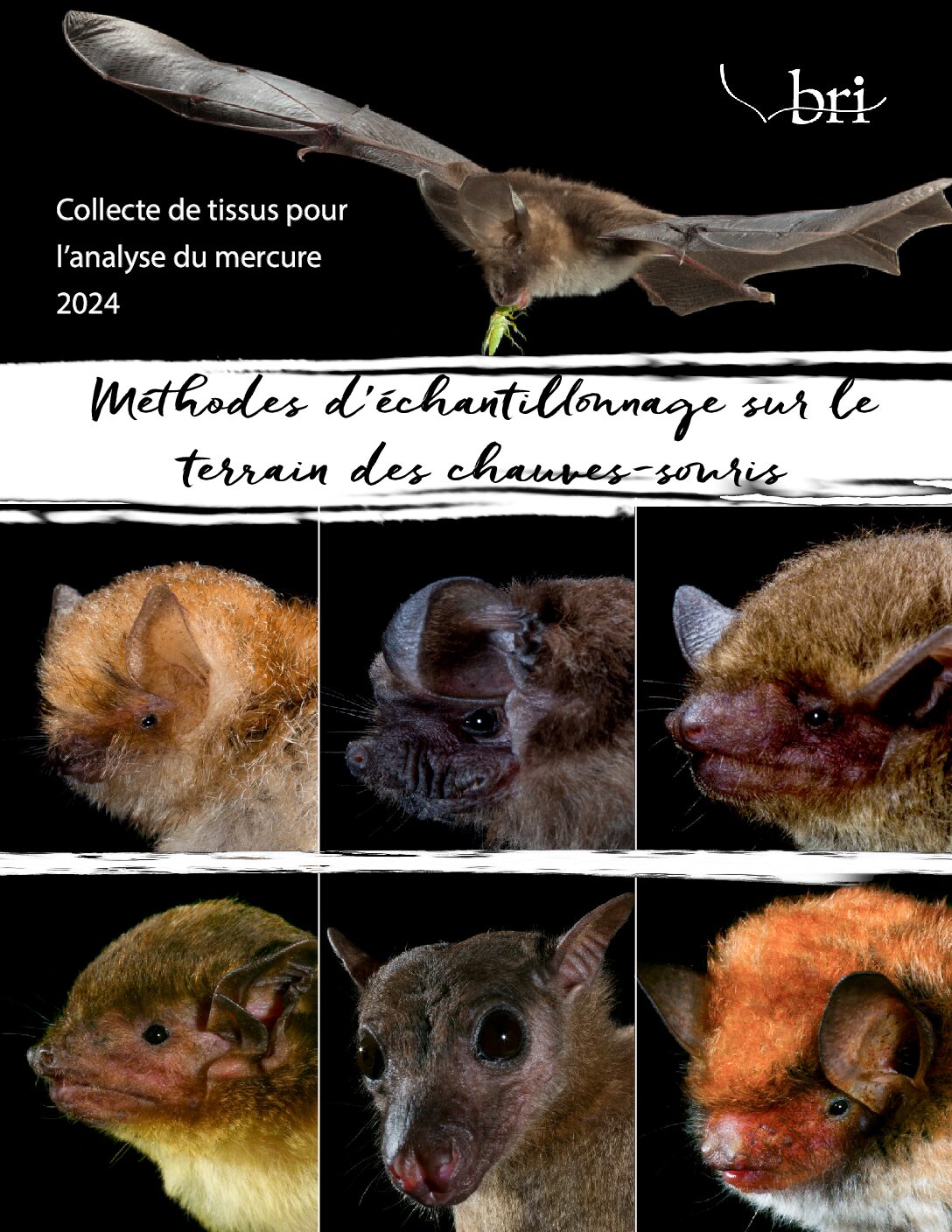
Méthodes d’échantillonnage sur le terrain des chauves-souris: Collecte de tissus pour l’analyse du mercure
Published: October 2024
La collecte et l’analyse non létales d’échantillons de sang entier chez les chauves-souris sont utilisées pour identifier l’absorption alimentaire récente de contaminants, tels que le mercure (Evers 2018), et divers isotopes stables (c’est-à-dire δ13C, δ15N, δ34S) qui permettent de reconstruire le régime alimentaire et d’identifier les origines migratoires.
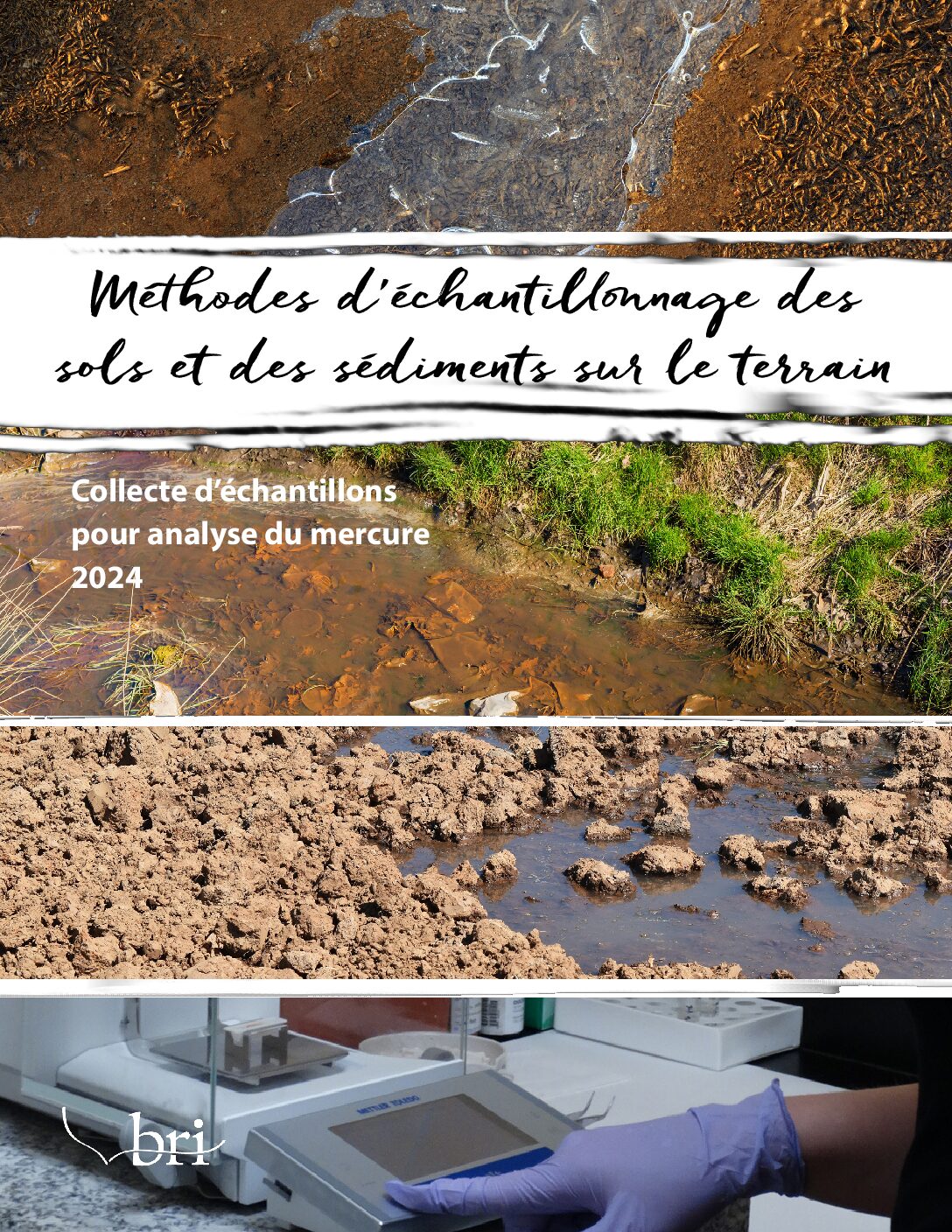
Méthodes d’échantillonnage des sols et des sédiments sur le terrain
Published: October 2024
Le présent protocole d’échantillonnage est conçu comme un guide pour la collecte, le traitement et l’expédition d’échantillons de sol et de sédiments destinés à l’analyse du mercure. La collecte d’échantillons selon ces protocoles généraux permettra d’établir des comparaisons entre les sites d’échantillonnage, d’aider à identifier les sites potentiels présentant des risques élevés pour la santé humaine et la santé des écosystèmes, et de mieux comprendre les flux et les mécanismes du mercure.
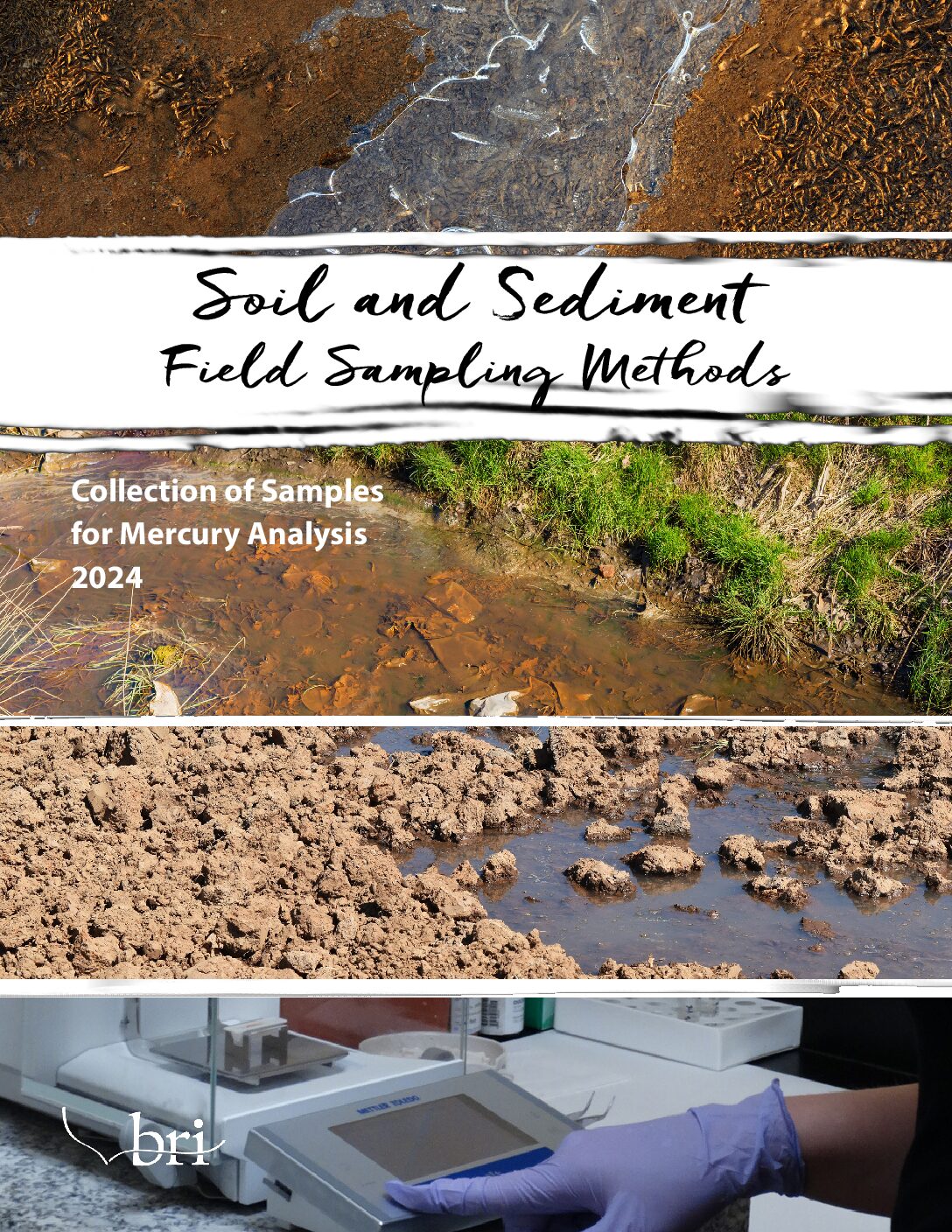
Soil and Sediment Field Sampling Methods: Collection of Samples for Mercury Analysis
Published: October 2024
This sampling and testing protocol is designed to serve as a guide for collection, storage, shipping, and analysis of soil and sediment samples for the measurement of mercury. The use and application of these recommended sampling protocols will help ensure consistency in sampling across sites and through time so the collected data will be comparable and scientifically sound for comparison with other global monitoring studies.
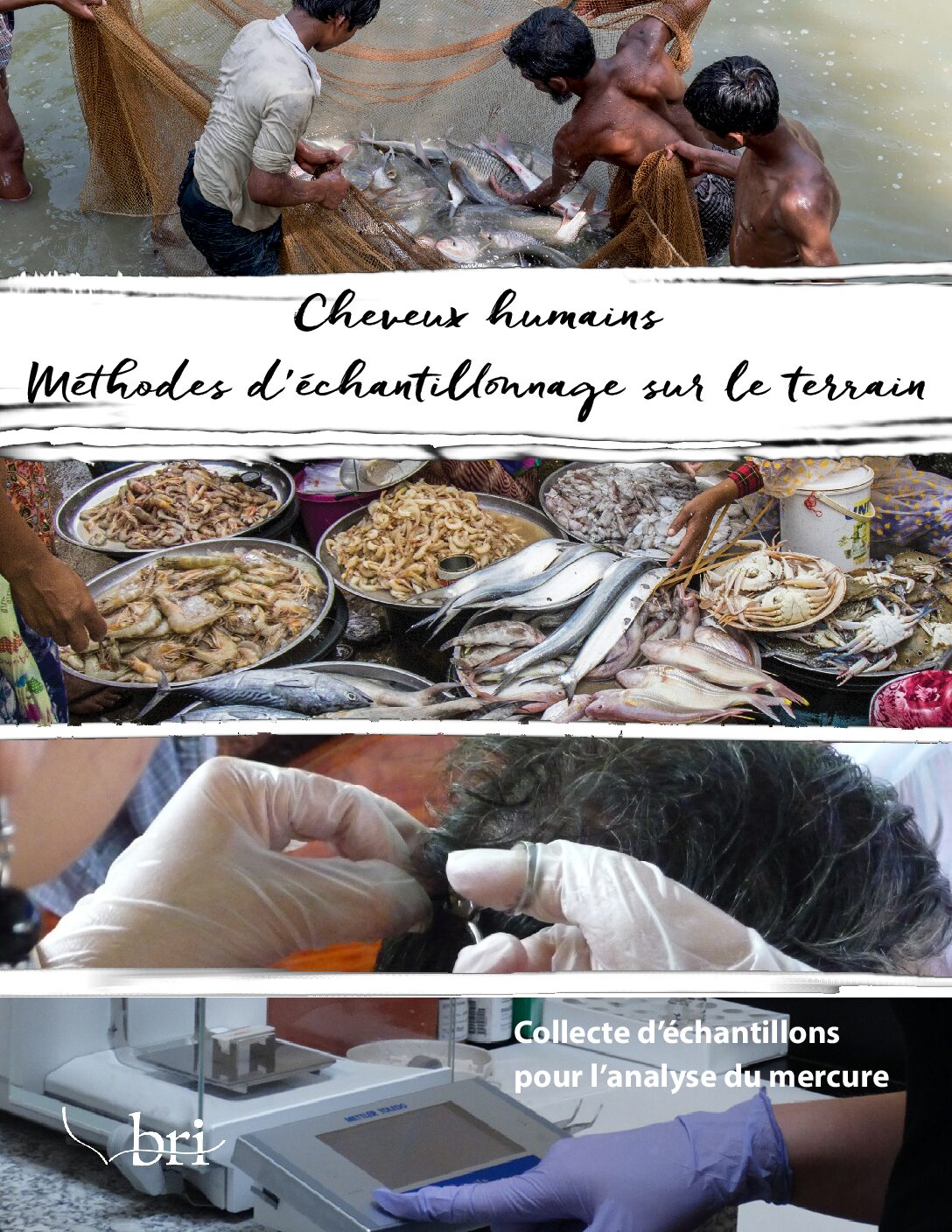
Méthodes d’échantillonnage des cheveux humains: Collecte d’échantillons pour l’analyse du mercure
Published: October 2024
Ce protocole d’échantillonnage est conçu comme un guide pour la collecte, le traitement et l’expédition d’échantillons de cheveux humains pour la mesure du mercure total. L’utilisation de cette méthodologie par tous les collaborateurs garantira la cohérence de l’échantillonnage dans tous les lieux et la solidité scientifique des données générées. La collecte correcte des échantillons garantit la pertinence des résultats pour la comparaison avec d’autres résultats de surveillance mondiale.
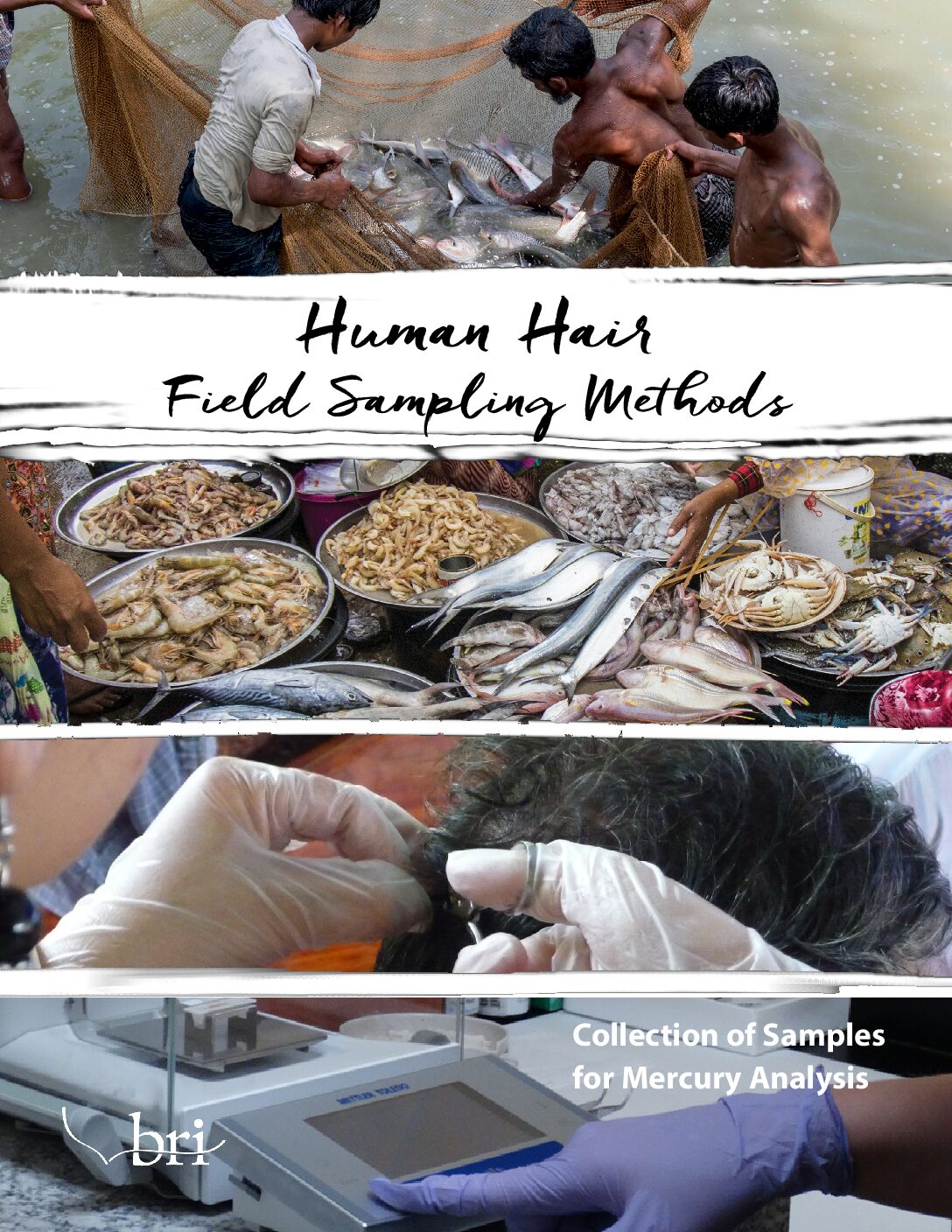
Human Hair Field Sampling Methods: Collection of Samples for Mercury Analysis
Published: October 2024
This sampling protocol is designed as a guide for the collection, processing, and shipping of human hair samples for the measurement of total mercury. The use of this methodology by all collaborators will ensure consistency in sampling in all locations and that data generated will be scientifically sound. Proper sample collection ensures suitability of the results for comparison with other global monitoring results.
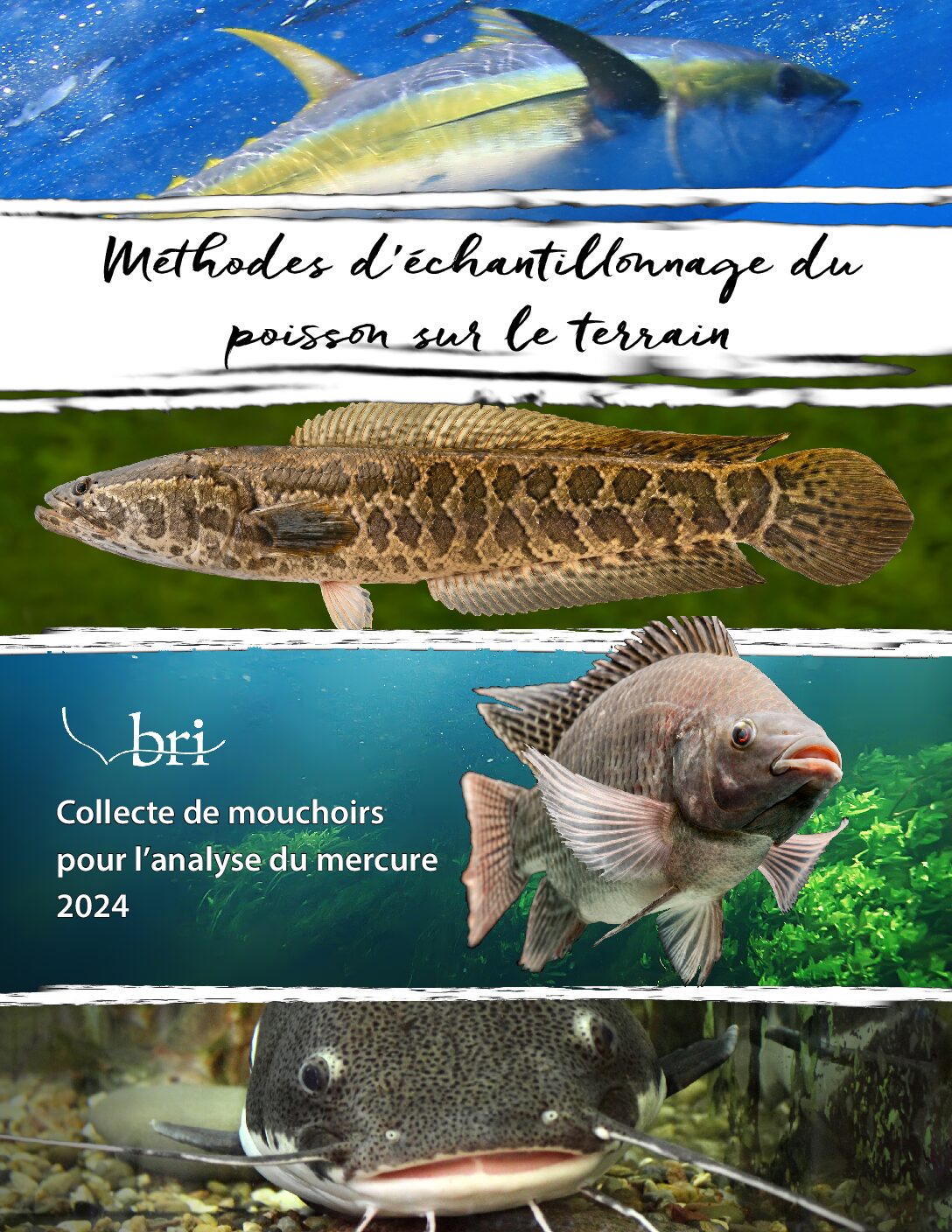
Méthodes d’échantillonnage des poissons sur le terrain: Collecte de tissus pour l’analyse du mercure
Published: October 2024
Le présent protocole d’échantillonnage est conçu comme un guide pour la collecte, le traitement et l’expédition d’échantillons de tissus de poisson en vue de la mesure du mercure total. La collecte d’échantillons selon ces protocoles généraux permettra d’effectuer des comparaisons entre les sites d’échantillonnage et contribuera à l’identification des points chauds potentiels du mercure présentant un risque pour la santé humaine et l’écosystème.