

On this page: Introduction | Banding Efforts | Satellite Telemetry| Project Collaborators
Movement and Dispersal Patterns of Maine Adult and Subadult Bald Eagles
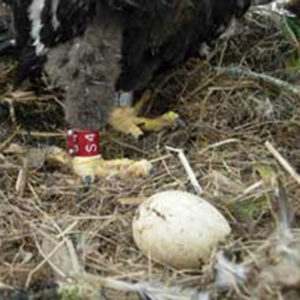
BRI began small-scale efforts to band Maine Bald Eagle nestlings in 2001 and by 2004, BRI and collaborators began to evaluate Maine’s Bald Eagle population’s exposure to mercury. In addition to taking samples to be used for contaminant, genetics, and other analyses, researchers placed “silver” bands and red “color bands” on nestlings. The silver band, issued by the federal USGS Bird Banding Lab, contains a unique ID– that band, if recovered, can be linked back to that individual’s original banding location and related information. On the leg opposite the silver band, researchers typically placed a colored band, which, Unlike silver bands, can often be read from a distance with a spotting scope or digital camera. This information can be used to identify the banding origin of that particular eagle.
BRI’s Bald Eagle Banding Efforts
BRI researchers have fitted red color bands to nearly 700 Bald Eagle nestlings throughout the state (Figure 1). This notable effort is a significant investment in our current and future understanding of Maine’s recovering Bald Eagle population. Photographers now encounter our Maine red-banded eagles throughout the Northeastern U.S. regularly – BRI biologists commonly get 1-2 Bald Eagle band ‘encounters’ per week, and the frequency of these observations seems to be increasing! As of summer 2015, BRI has received information on more than 250 Bald Eagles banded as nestlings throughout the northeastern U.S. and Canada.
BRI’s growing database of band encounter information allows us to better understand many aspects of the ecology and recovery of Bald Eagles throughout the New England region. For example, estimates of the age of first breeding are typically determined by observing known-aged individuals banded as nestlings. Observations of banded individuals can also help provide estimates of survival, natal dispersal (the distance from a bird’s natal area that it goes to breed itself), and movement patterns. We aim to use BRI’s extensive banding database to answer some of these critical questions about Eagles that are important in making informed management and conservation decisions.
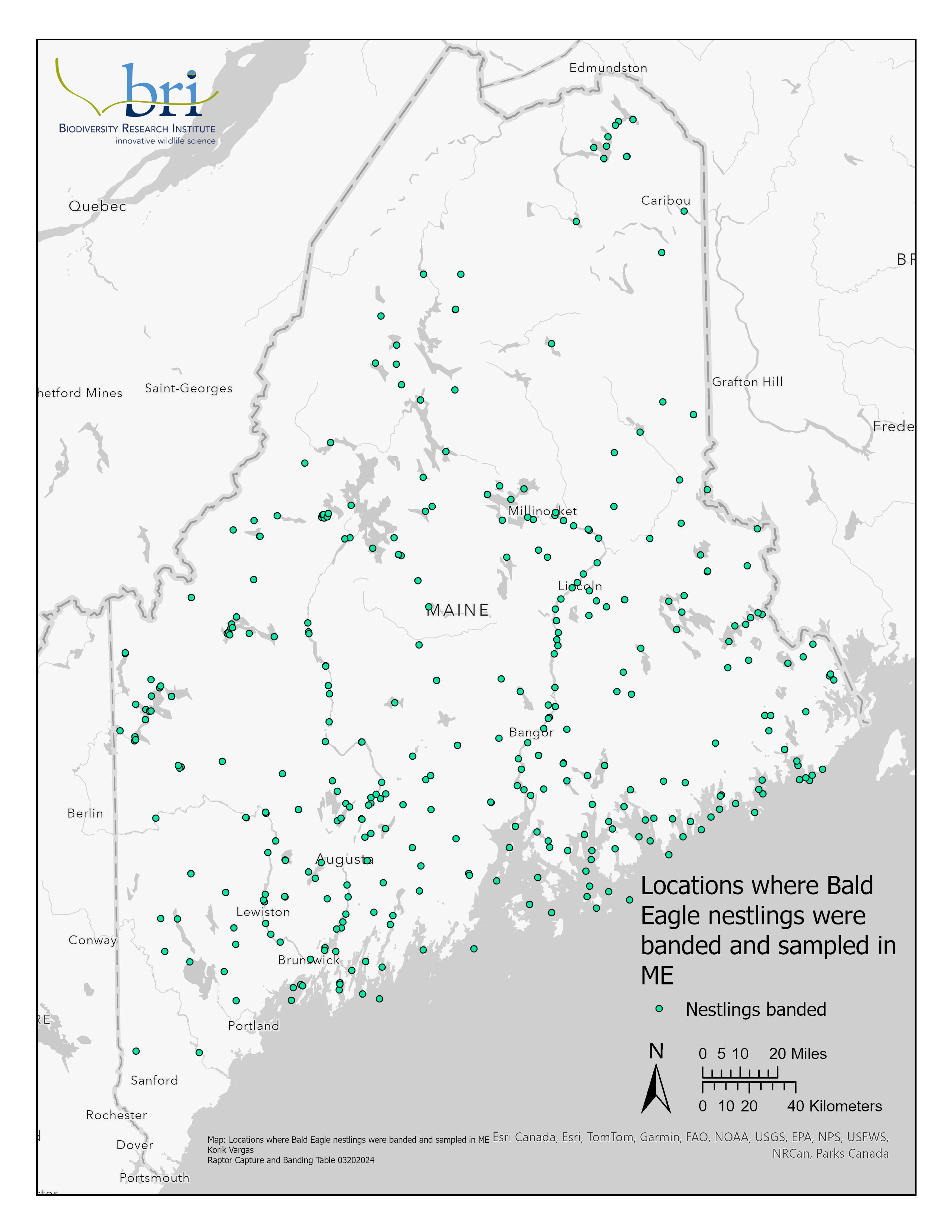
Figure 1: Locations throughout Maine where Bald Eagle nestlings were banded by BRI and collaborators through numerous research efforts, 2001-2023.
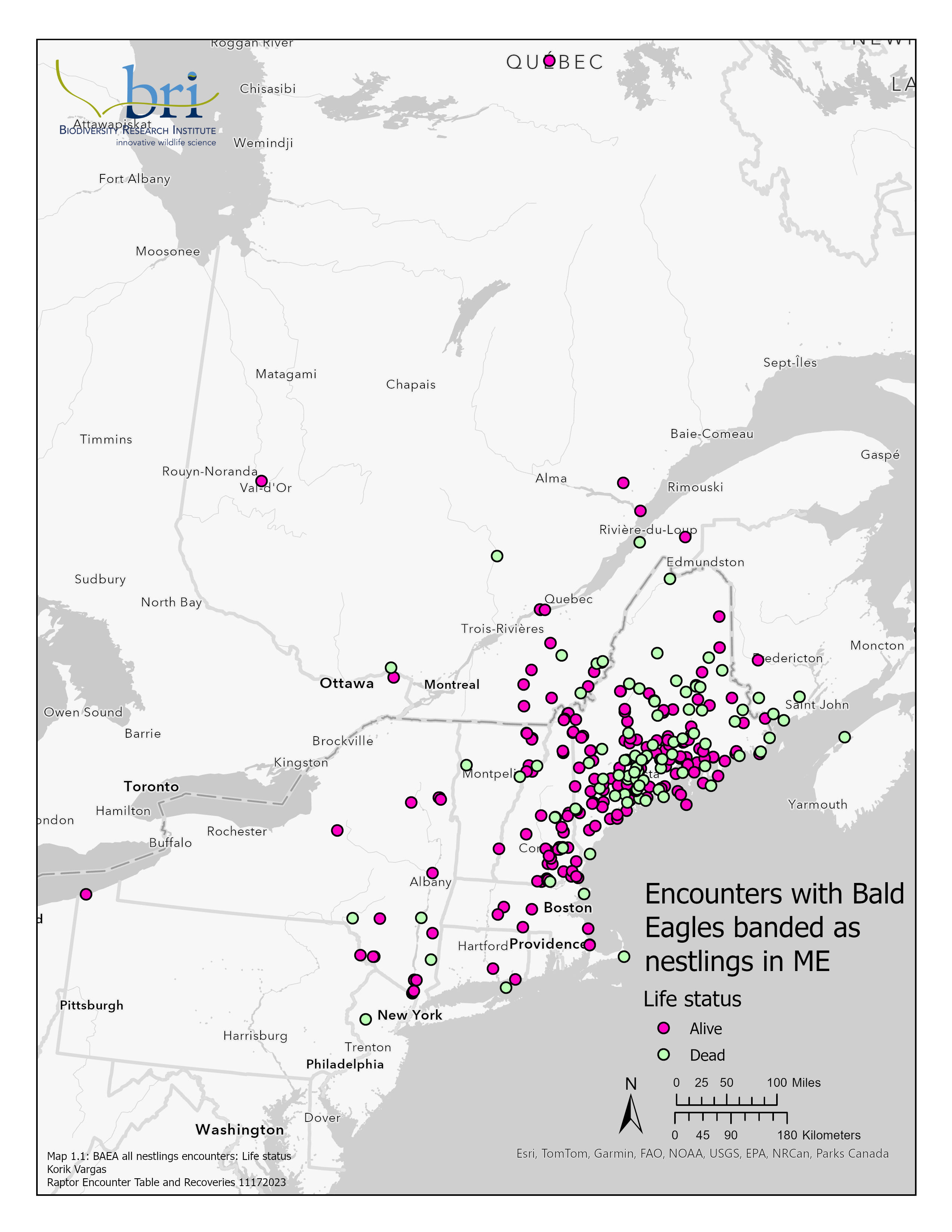
Figure 2: Encounters with Bald Eagles banded as nestlings in Maine.
Satellite Telemetry

In 2005, BRI and its collaborators began tracking Bald Eagles using satellite telemetry. While initial efforts aimed to better understand the habitat use of Bald Eagles on Maine hydroelectric reservoirs, satellite-tagged eagles quickly revealed that they could teach us about a wide range of subjects. From 2005 – 2015, we have fitted 21 fledgling and one adult Bald Eagle with satellite units. Tracking using telemetry offers researchers the opportunity to document individuals’ daily movements for many consecutive years.
Our satellite-tagged individuals have demonstrated revealing information about Maine’s ‘subadult’ Bald Eagles. They help us determine what habitats are important to them for roosting and feeding during all months of the year, for both adult and subadult eagle age classes (i.e., 1-, 2-, 3-, and 4-year olds). For example, our moderate sample of satellite-tagged eagles is already helping demonstrate the value of seasonally abundant food supplies, such as anadromous fish runs, to Bald Eagle populations. We are excited to track this cohort of eagles for years to come and tell their story to aid in conservation and management decision-making.

Figure 3: Locations throughout Maine where Bald Eagle Fledglings were instrumented with satellite transmitters, 2009-2015. Read the full report here.

Figure 4: Composite Utilization Distributions for Maine Bald Eagles during the second full year (based on 1 May) as revealed by satellite telemetry. Read the full report here.

Figure 5. Annual use areas for Maine Bald Eagles during the first three years of life. Colored polygons reflect “core use areas” (50% Utilization Distributions). Polygon values indicate the number of overlapping composite age class layers present. (i.e., red polygons highlight areas in which eagle year 1, year 2 and year 3 composite use areas overlapped, presumably reflecting areas of higher conservation value/importance).


Banded eagle, photographed by Wayne Thomson
Project Collaborators
Biologists from the Maine Department of Inland Fisheries and Wildlife, the U.S. Fish and Wildlife Service, and NextEra Energy collaborated with BRI on efforts to band and sample nestling Bald Eagles.
For more information on this study, please contact:
Chris DeSorbo, Raptor Program Director
Chris.desorbo@briwildlife.org
Downloads
- DeSorbo, C. R., A. T. Gilbert, C. P. Persico, D. Hengstenberg, W. Hanson and D. E. Meattey. 2021. Bald Eagle Movements Relative to the Naval Support Activity Cutler in Cutler, Maine. BRI Report # 2021-16 Submitted to NAVFAC PWD-ME, Portsmouth, NH. Biodiversity Research Institute, Portland, Maine. 34 pp
- DeSorbo, C. R., A. T. Gilbert, C. P. Persico and W. Hanson. 2020. Home Range Patterns and Dispersal Timing of Subadult Bald Eagles from Maine. Report # 2020-39. Biodiversity Research Institute, Portland, Maine.
- DeSorbo, C. R., D. Riordan, J. Tash, R. B. Gray and W. Hanson. 2015. Documenting Areas of Importance to Maine Subadult Bald Eagles: Insights from Satellite Telemetry. Report #2014-24 submitted to the Maine Outdoor Heritage Fund, Portland, Maine, The Bailey Wildlife Foundation, Cambridge MA, and the Maine Department of Inland Fisheries & Wildlife, Bangor ME. 38 pp.
Photo Credits: Banded eagle with egg © BRI – Chris DeSorbo; Satellite telemetry eagle © Phil Brown; Banded eagle © Wayne Thomson
